
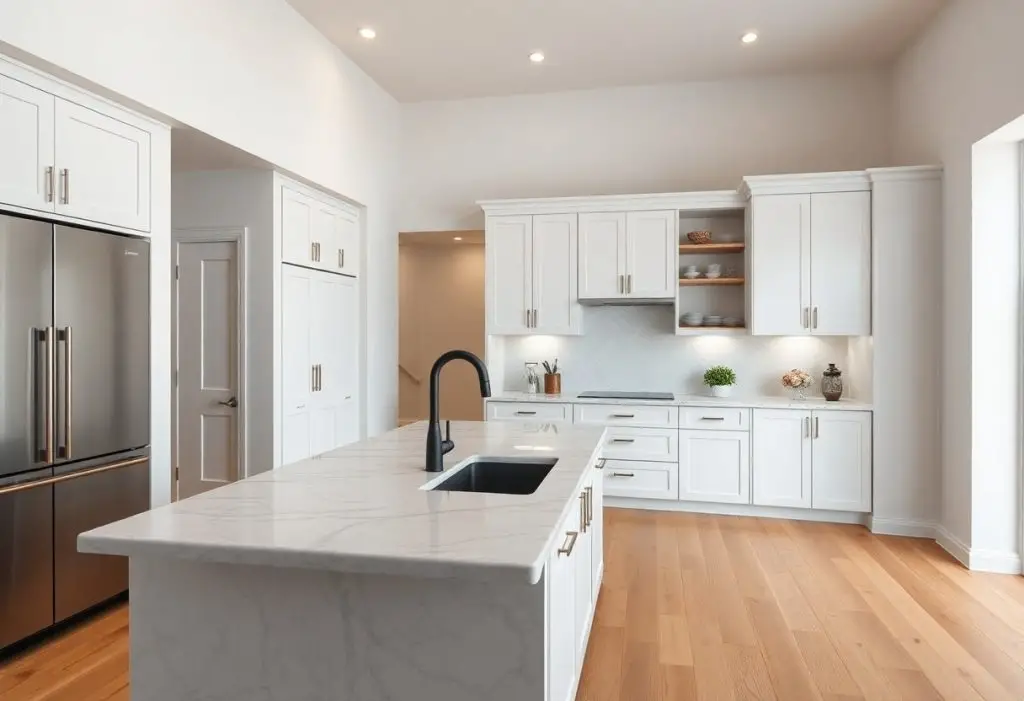
Most smart home improvements focus on durable materials and purposeful layouts, so you can enhance comfort, storage, and resale value while maintaining elegant finishes that suit daily use and long-term needs.
Maximizing Spatial Utility Through Open Floor Plans
Open-plan layouts let you combine living, dining and kitchen areas so movement and sightlines expand, making small homes feel larger while improving social flow.
Structural Modifications for Enhanced Natural Light
Skylights, larger windows and interior glass walls enable you to draw daylight deeper into core rooms, reducing reliance on artificial light and lifting mood.
Defining Zones with Architectural Hardware and Flooring
Hardware selections and varied flooring allow you to define kitchen, dining and lounge zones without walls, using texture, color and threshold details to guide movement.
Consider pairing hardwood planks in living areas with durable tile at cooking zones and narrow metal or wood thresholds to signal transitions; consistent door hardware finishes and low-profile rails help you perceive boundaries while preserving openness, and strategic rugs or partial screens add tactile separation without compromising sightlines.

High-Performance Kitchen Systems
Kitchens optimized for performance combine efficient layouts, integrated appliances, and durable finishes so you can cook faster, clean easier, and reduce energy use without sacrificing style.
Custom Cabinetry with Ergonomic Storage Solutions
Cabinetry tailored to your routine incorporates pull-out shelves, adjustable trays, and soft-close hardware so you can reach items safely and keep counters clear.
Selecting Durable, Low-Maintenance Countertop Materials
Countertops chosen for durability resist stains, heat, and scratches so you can maintain a clean surface with minimal upkeep and long-term value.
Compare quartz, granite, solid surface, and high-pressure laminate on porosity, heat tolerance, scratch resistance, and sealing needs so you can pick the best fit for daily use. Quartz gives you low maintenance and consistent appearance, while granite brings natural variation and may require periodic sealing. Solid surface resists stains and lets you repair scratches; laminate offers cost-effectiveness but shows wear sooner. Factor in warranty, installation cost, and your cooking habits so you can decide which material fits your needs.
Luxury Bathroom Refinements and Plumbing Innovation
Water-Efficient Fixtures with Contemporary Aesthetics
You’ll choose sleek low-flow faucets and showerheads that cut consumption without sacrificing pressure, pairing modern finishes with measurable savings and refined performance.
- Low-flow aerators: help you maintain pressure while reducing water use.
- Sensor faucets: prevent waste in high-traffic areas you use frequently.
- WaterSense-certified showers: deliver comfort with verified efficiency for your home.
Fixture Comparison
| Fixture | Benefit |
|---|---|
| Faucet aerator | Lower flow with similar feel |
| Touchless tap | Reduced standby waste |
| Low-flow showerhead | Energy and water savings |
Advanced Waterproofing and Radiant Heating Systems
Modern installations give you multilayer membranes and in-floor radiant heating that prevent moisture damage and deliver consistent warmth for a spa-like experience.
Detailed plans ensure you specify continuous waterproof membranes, taped seams, and proper floor slopes to stop leaks beneath tiles; electric or hydronic radiant systems integrate with insulation and programmable thermostats so you control comfort and operating costs, and you should engage certified installers to test systems before finishing.
- Membrane selection: choose materials suited to your subfloor and tile system.
- Heating type: assess electric mats versus hydronic loops for your usage.
- Commissioning: require pressure and flood tests so you avoid hidden failures.
Waterproofing & Heating Options
| Component | What it gives you |
|---|---|
| Sheet membrane | Immediate barrier, fast install |
| Liquid-applied membrane | Seals complex geometry |
| Electric radiant mat | Simple retrofit warmth |
| Hydronic loops | Efficient zoned heating |
Smart Home Technology and Energy Efficiency
Smart integrations let you automate schedules, monitor energy use, and cut utility bills while preserving comfort and style; you can prioritize occupancy sensors, remote access, and usage analytics to fine‑tune performance to daily routines.
Integrating Automated Climate and Lighting Controls
Automated climate and lighting controls let you set temperature zones, create lighting scenes, and respond to occupancy so you lower consumption without sacrificing comfort; use adaptive schedules and geofencing to align systems with your habits.
High-Efficiency Window and Insulation Upgrades
Upgrade windows and insulation to reduce heat transfer, stabilize indoor temperatures, and lower HVAC run times while enhancing curb appeal and long‑term savings.
Properly chosen windows-double or triple glazing, low‑E coatings, and inert gas fills-paired with continuous insulation and meticulous air sealing reduce thermal loss and moisture risk. You can compare frame materials, R‑values, and installation methods, seek certified installers, and check local incentives to maximize comfort and payback.
Sustainable Materials for Modern Interiors
Consider selecting materials that lower environmental impact while maintaining modern aesthetics; you can choose durable, low-maintenance options that age gracefully and reduce long-term costs, blending style and performance throughout your home.
Utilizing Reclaimed Wood and Recycled Composites
Choose reclaimed wood and recycled composites to add warmth and character while cutting waste; you will reduce embodied carbon, support circular supplies, and enjoy unique textures that pair well with contemporary finishes without sacrificing durability.
Low-VOC Finishes for Improved Indoor Air Quality
Select low-VOC paints and sealants to reduce off-gassing and protect your household’s health; you will notice fresher air, quicker occupancy after projects, and reduced long-term odor without compromising color or finish quality.
You can choose low-VOC paints, stains, adhesives, and varnishes labeled Green Seal or GREENGUARD to limit harmful emissions. Look for products under common VOC thresholds for interiors, prefer water-based formulas, and ensure good ventilation during application and curing. Combining quality primers and proper drying times preserves finish durability while keeping indoor air safer for occupants.
Strategic Outdoor Living and Curb Appeal
Your curb and outdoor living areas should balance functionality with charm, creating welcoming approaches and usable spaces that boost daily comfort and property value.
Weather-Resistant Hardscaping and Decking Solutions
Choose low-maintenance decking and permeable pavers so you can enjoy durable patios and tidy walkways year-round with minimal upkeep.
Professional Landscape Lighting for Safety and Style
Install layered lighting so you can define paths, accent entryways, and extend evening use while improving safety around your home.
Consider a mix of warm LEDs, low-voltage fixtures, timers, and motion sensors to cut energy use and match lighting to your schedule. You should place uplights to reveal texture, shield fixtures to avoid glare, and walk the property after dusk to fine-tune angles for clear sightlines and balanced illumination.
Conclusion
To wrap up, you should choose practical designs that enhance comfort, increase value, and reflect your taste by combining aesthetics with durable solutions for a functional and beautiful home.