
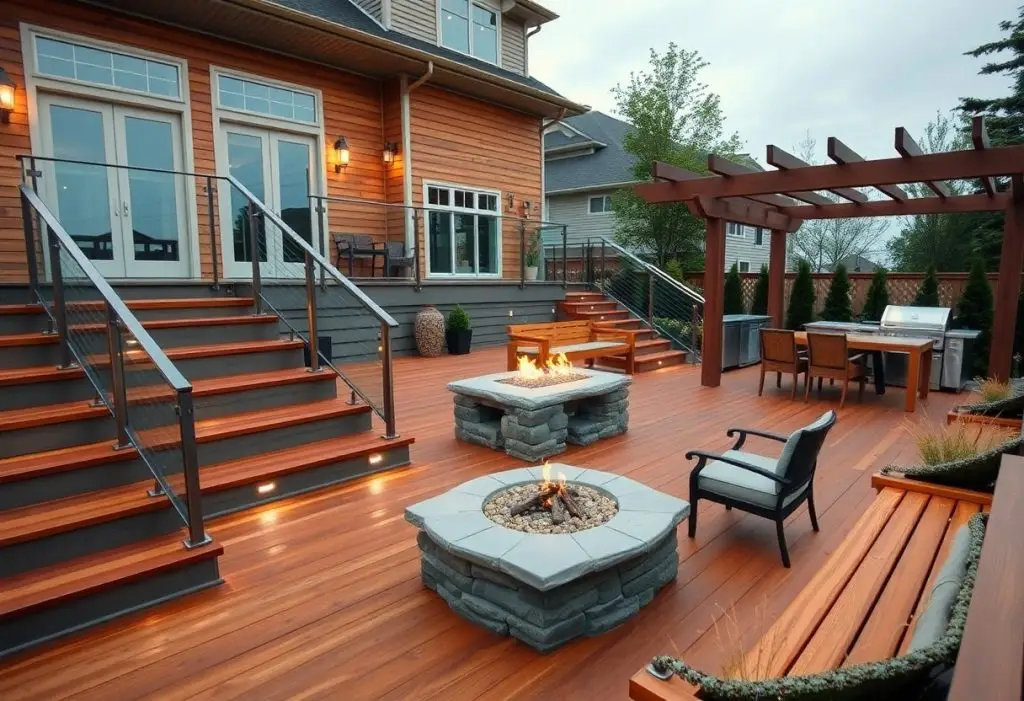
The Selection of the Grain
You feel the texture of wood beneath your fingers for a reason-grain pattern influences both beauty and durability. Straight grains offer a clean, uniform look that resists warping, ideal for high-traffic areas. Swirling or irregular grains add character but may require more maintenance. Your choice shapes how light interacts with the surface and how well the material stands up to weather over time.
The Architecture of the Slope
Building a deck on uneven terrain opens creative opportunities rather than limitations. You can step the deck into the hillside, creating tiered levels that follow the natural fall of the land. This approach blends structure with environment, enhancing both stability and visual appeal. With thoughtful placement and support posts anchored deep into the slope, your deck becomes a grounded, organic extension of the landscape. Retaining walls or stone planters can double as seating and erosion control, making function and form work together seamlessly.
The Play of Light and Shadow
You shape mood and dimension on your deck by how light moves across surfaces throughout the day. Positioning fixtures beneath railings or within steps creates subtle glows that guide movement after dark. Sunlight filtering through slatted pergolas casts dynamic patterns that shift with the hours, adding visual rhythm. Strategic placement of mirrors or reflective materials can bounce light into shaded corners. You control atmosphere not just with brightness, but with the balance between illumination and the spaces it leaves untouched.
Elements of Heat and Sound
You can extend your deck’s usability into cooler evenings by integrating subtle heat sources like recessed fire pits or wall-mounted heaters. These features add warmth without dominating the space. Pair them with sound elements-such as a small water feature or concealed outdoor speakers-to create a layered sensory experience. The gentle ripple of water or soft background music enhances comfort and privacy, making your deck feel like a true outdoor retreat.
The Integration of the Green
Plants breathe life into your deck, softening edges and blending structure with nature. Choose layered greenery-tall grasses, climbing vines, or potted shrubs-to create depth and privacy. Position planters at varying heights to add rhythm without crowding space. You’ll enjoy not just beauty, but improved air quality and a cooler microclimate underfoot.
The Weight of the Furniture
You need to consider how heavy your outdoor furniture is when planning your deck’s layout and structure. Excess weight can strain decking materials, especially on upper-level platforms. Choose pieces that match your deck’s load capacity-lightweight metals and all-weather wicker offer durability without the burden. Your safety and deck longevity depend on this balance.
To wrap up
From above, your deck design choices shape how you experience outdoor living. You can turn unused space into a personal retreat with smart layouts, durable materials, and thoughtful lighting. Your vision, combined with practical features like seating and shade, creates a functional, inviting area. You don’t need excess to make an impact-simplicity often delivers the strongest results.