
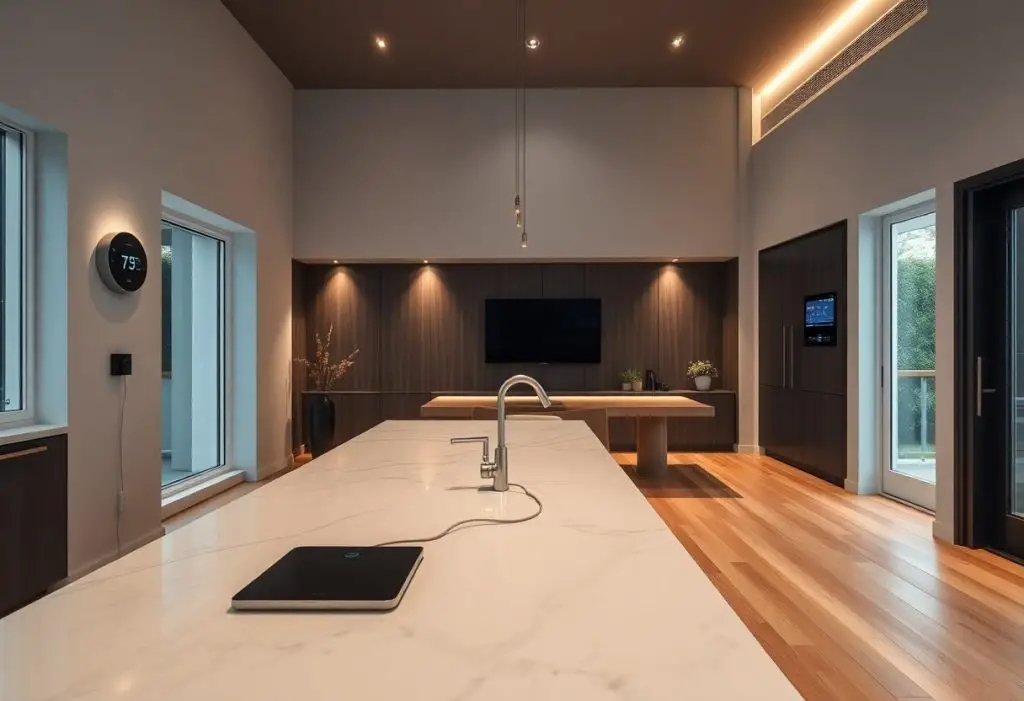
Most homeowners can transform ordinary rooms into a dream home with targeted upgrades; you will learn practical design, smart tech, and energy-saving improvements that raise comfort, functionality, and resale value.
Strategic Planning for Smart Home Integration
Planning your smart-home rollout helps you prioritize devices, ensure compatibility, and schedule phased installs to minimize disruption and costs.
Assessing Lifestyle Priorities and Goals
List your daily routines and pain points to identify smart solutions that save time, increase comfort, and align with your long-term needs.
Budgeting for High-Impact Upgrades and ROI
Prioritize high-impact upgrades that match goals and offer clear returns, such as smart thermostats, security systems, and efficient lighting.
Estimate total project cost by adding device prices, installation, wiring, and monthly service fees, then compare those expenses to projected energy savings and added home value to determine payback period. Consider starting with network and security, choose interoperable standards like Matter to protect future choices, and check local rebates or utility incentives to lower upfront costs. If cash is limited, stagger projects seasonally, explore contractor financing or payment plans, and monitor energy and security metrics to validate ROI.
Maximizing Efficiency with Intelligent Climate Control
Smart climate control connects sensors, thermostats, and schedules so you reduce bills while staying comfortable year-round.
Smart Thermostats and Multi-Zone Systems
Thermostats that learn your habits and multi-zone systems let you set different temperatures room-by-room, so you only heat or cool occupied spaces.
Automated Window Treatments and Insulation
Automated blinds and smart shades adjust to sunlight and schedules, lowering heat gain and helping your HVAC run less.
Pairing automated treatments with upgraded insulation seals drafts and blocks peak solar gain, so you shrink heating and cooling loads, extend equipment life, and keep your rooms consistently comfortable without constant adjustments.
Strengthening Home Security and Resident Safety
Upgrading your security systems lowers risks and gives you peace of mind by combining sensors, alarms, and smart lighting to deter intruders and detect hazards like smoke or carbon monoxide.
Integrated Surveillance and Real-Time Monitoring
Cameras and cloud-connected feeds let you monitor entrances in real time, review footage remotely, and receive alerts on suspicious activity so you can act quickly.
Smart Locks and Secure Access Protocols
Smart locks let you control entry with codes, biometrics, or temporary guest keys and log access history for accountability.
You should configure multi-factor authentication, unique user codes, and time-restricted guest access while keeping firmware updated and using encrypted communications so your locks remain resistant to tampering and you can audit events and revoke permissions instantly from your phone.
Modernizing the Kitchen with Connected Technology
Connected hubs let you control lighting, appliances, and entertainment from a single app, making meal prep faster and your kitchen more intuitive.
High-Tech Appliances for Culinary Precision
Precision ovens and sensor-equipped cooktops give you exact temperatures and timing, so recipes turn out consistently and you waste less food while experimenting with new techniques.
Smart Inventory and Maintenance Systems
Inventory apps track items and expiration dates so you know what to use first and what to restock, cutting waste and simplifying grocery planning.
Automatic inventory systems combine barcode scanning, fridge cameras, and weight sensors so you can see stock levels in real time; they sync with shopping lists, suggest recipes from what you have, and send restock reminders. Predictive analytics can reorder staples, while maintenance alerts notify you about filter changes, leaks, or appliance faults so you avoid costly repairs.
Optimizing Health and Indoor Environmental Quality
You can improve indoor health by controlling ventilation, humidity, filtration, low-VOC materials, and real-time sensors; prioritize targeted upgrades that reduce allergens, mold, and chemical exposure while optimizing comfort.
Advanced Air Purification and Monitoring
Install HEPA and activated-carbon purifiers along with continuous VOC and CO2 monitors so you detect contaminants early, automate ventilation responses, and receive maintenance alerts to maintain peak performance.
- Place sensors in bedrooms, living areas, and near kitchens for accurate coverage.
- Choose HEPA for particles and activated carbon for gases and odors.
- Integrate devices with ventilation and set automated schedules and alerts.
Air Quality Upgrades
| Upgrade | Benefit |
| HEPA + Carbon filters | Removes particles and VOCs |
| Continuous monitors | Real-time contamination alerts |
| Demand-controlled ventilation | Balances fresh air and energy use |
Intelligent Water Filtration and Conservation
Choose point-of-entry and point-of-use filters, smart leak detectors, and flow sensors so you reduce contaminants, track usage, and prevent damage while conserving water automatically.
Smart systems combine whole-house filtration with targeted point-of-use units so you address both general contaminants and drinking-water quality; install sediment and carbon pre-filters, add reverse-osmosis or UV at taps for drinking, and use smart meters plus leak sensors to detect waste and auto-shutoff; you should schedule filter replacements per manufacturer and monitor water hardness to protect plumbing.
Future-Proofing Your Home Connectivity
You should plan wiring, upgrade to multi-gig switches, and allocate conduit paths so new technologies plug in without major renovations; keep space for wired backbones and separate guest networks to handle device growth and security.
Establishing a Reliable Network Infrastructure
Install wired Ethernet where possible, place access points for even coverage, and choose quality routers with QoS and VLAN support so you manage traffic and prioritize smart home devices.
Centralized Control Hubs and Voice Integration
Use a central hub to unify apps, set scenes, and add voice assistants for hands-free commands; prioritize hubs that support Matter, Zigbee, or Z-Wave for wider device compatibility.
Choose hubs that offer local processing and support Matter, Zigbee, and Z‑Wave so you reduce cloud dependence and broaden device choices. Configure scenes and voice profiles per room, set offline fallbacks for critical systems, and isolate smart devices on VLANs for security. Test automations, schedule firmware updates during low use, and prefer platforms with clear privacy controls and easy migration paths as standards evolve.
Summing up
Summing up, you can transform your home into a dream space by prioritizing smart upgrades like energy-efficient systems, intuitive lighting, and connected security; you should plan budget, choose scalable devices, and focus on comfort and resale value to ensure practical, lasting improvements that match your lifestyle.