
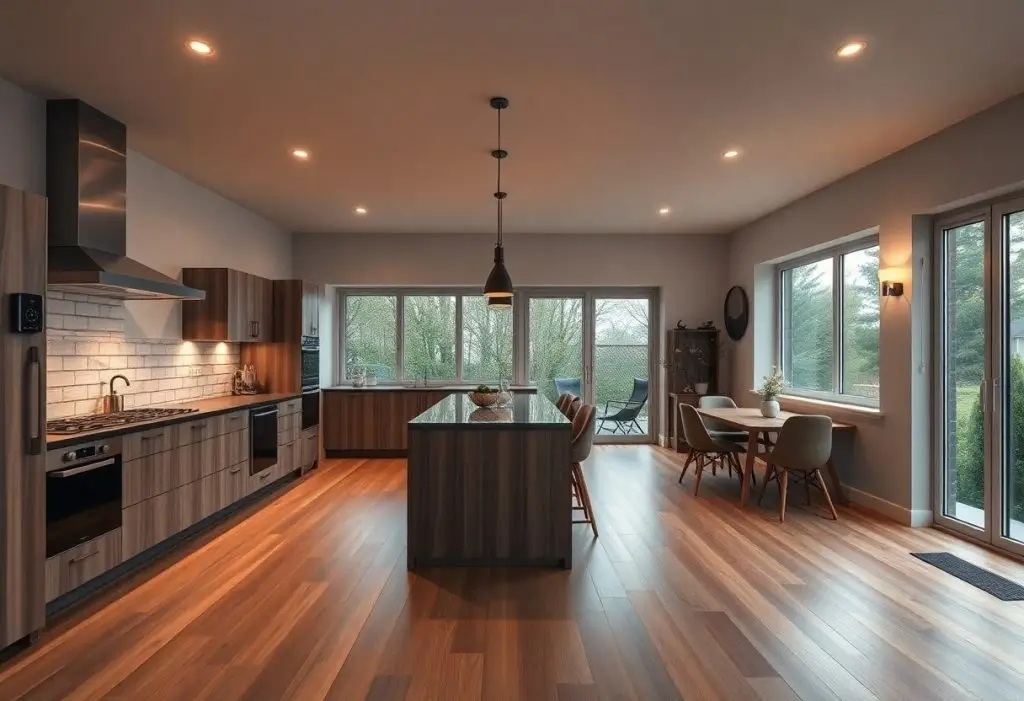
With strategic upgrades and efficient systems, you can increase comfort, lower energy bills, and streamline daily living while improving indoor air quality and lighting for lasting value.
High-Performance Insulation and Windows
Upgrading wall and attic insulation and pairing it with high-performance windows reduces energy bills and boosts year-round comfort, letting you maintain steady indoor temperatures with less HVAC strain.
Selecting Energy-Efficient Glazing
Choose low-emissivity coatings, insulated frames, and multiple glazing layers so you cut solar heat gain in summer and retain warmth in winter while keeping daylight and views.
Strategic Air Sealing and Thermal Barriers
Seal gaps around windows, doors, and penetrations and add continuous thermal barriers so you limit drafts, reduce moisture risk, and improve HVAC efficiency.
Combining targeted air sealing with insulated sheathing and water-resistant barriers helps you close thermal bypasses in walls and attics. You should apply spray foam or high-quality caulk at framing junctions, install gaskets at electrical boxes, and insulate attic hatches to prevent heat loss and condensation issues.
Intelligent Climate Control Integration
You can combine sensors, schedules, and smart thermostats to maintain comfort while cutting energy use, with automated adjustments based on occupancy, weather, and your routines.
Smart Thermostats and Learning Algorithms
Smart thermostats learn your patterns and adjust setpoints so you save energy without sacrificing comfort, and you can override settings remotely when priorities change.
Multi-Zone HVAC System Optimization
Zoned HVAC lets you set different temperatures for areas so you target comfort where you spend the most time and reduce wasted conditioning in unused rooms.
Advanced zoning optimization uses variable-speed fans, motorized dampers, and interconnected thermostats with occupancy sensors and forecast data so you can prioritize comfort in high-use zones, schedule setbacks in low-traffic areas, and monitor performance analytics to cut bills and extend equipment life.
Sustainable Kitchen and Appliance Upgrades
Kitchen upgrades guide you toward long-term savings by combining efficient appliances, durable materials, and smarter layouts that lower energy use and improve daily comfort.
Energy Star Certified Technology
You can cut utility costs by choosing Energy Star appliances that use less power and water, deliver reliable performance, and often qualify for rebates or incentives.
Ergonomic Design for Maximizing Utility
Ergonomic layouts help you reduce strain and speed tasks by placing frequently used tools within easy reach and optimizing counter heights and storage.
Optimize your kitchen workflow by setting countertops, sink, and cooktop within a compact work triangle to cut steps; choose adjustable-height islands, pull-out shelves, and drawer organizers so you access items effortlessly, reduce bending, and maintain posture during prep.
Advanced Lighting and Natural Illumination
Lighting choices shape comfort and efficiency; you should prioritize layered fixtures, dimming zones, and sensors to balance warm ambient light with targeted task illumination while reducing energy use.
- Layer fixtures for ambient, task, and accent needs.
- Install dimmers and zoning to match activities.
- Use occupancy and daylight sensors to cut waste.
- Choose tunable color temperature for circadian support.
Lighting Features
| Feature | Benefit |
|---|---|
| Layered fixtures | Adaptable light for tasks and mood |
| Controls & sensors | Lower consumption and automated scenes |
| Daylight strategies | Reduced artificial lighting and improved comfort |
| Glazing & shading | Balanced light with thermal control |
Transitioning to Smart LED Systems
Switching to smart LEDs lets you adjust color temperature, automate schedules, and monitor consumption in real time, cutting costs and tailoring light to daily activities.
Maximizing Daylight Through Architectural Design
Orienting glazing and using light shelves, clerestories, and reflective finishes increases usable daylight, reduces artificial lighting demand, and helps you feel more comfortable.
Consider strategic window placement, proper overhangs, and high-reflectance interior surfaces to distribute light without glare; pair skylights with operable vents for ventilation, specify low-iron glass or selective coatings to control heat gain, and use simulation tools so you can model daylighting and thermal impact to balance comfort, energy performance, and visual tasks.
Water Efficiency and Modern Plumbing
Conserving water and modernizing plumbing reduces utility bills and increases household comfort; you benefit from fewer leaks, better pressure, and lower maintenance with efficient piping, insulation, and fixture choices.
Low-Flow Fixtures and Smart Water Monitoring
Low-flow fixtures and smart meters let you slash water use without losing performance; you can track leaks, set alerts, and adjust habits to save money and protect local supplies.
High-Efficiency Tankless Water Heating
Tankless units heat water on demand so you waste less energy; you enjoy endless hot showers, reduced standby losses, and a smaller footprint for tight mechanical spaces.
Installing a properly sized tankless heater requires matching its flow-rate to fixtures and considering simultaneous demand; you should evaluate fuel type, maintenance needs like descaling, upfront costs versus lifecycle savings, and whether a recirculation pump or point-of-use boosters better suit your layout.
Enhancing the Building Envelope
You should seal gaps, upgrade insulation, and select high-performance windows to reduce drafts, stabilize indoor temperatures, and lower energy bills for consistent comfort year-round.
Reflective Roofing Materials and Solar Integration
Consider reflective roofing and integrated solar to lower cooling loads; reflective coatings bounce heat, while rooftop panels generate power and improve efficiency and comfort.
Siding and Exterior Wall Insulation
Upgrading siding and exterior wall insulation limits heat transfer, reduces cold spots, and lets you combine materials for weather resistance and better indoor comfort.
Choose high-R continuous insulation to reduce thermal bridging, add a weather-resistant barrier with proper flashing, and use a ventilated rainscreen to promote drying; you should assess material durability, maintenance needs, and local climate guidance, and hire qualified installers for airtight seams and optimal moisture control.
Conclusion
Upon reflecting, you prioritize upgrades that improve comfort and energy efficiency, select durable materials and efficient systems, and plan projects to reduce disruption while lowering long-term costs.