
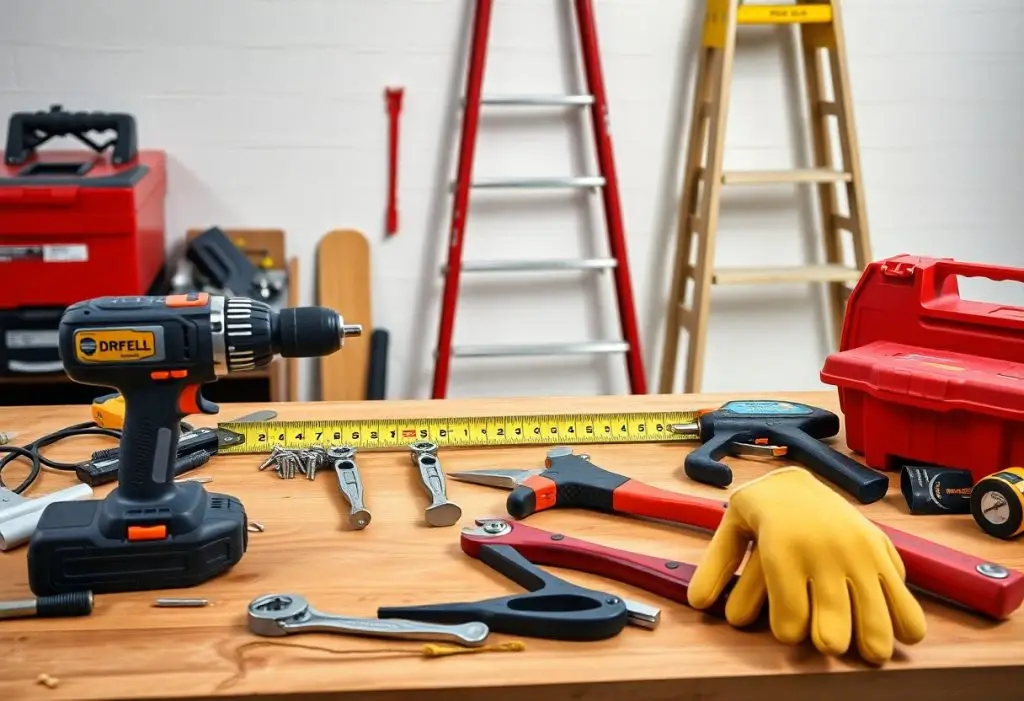
Repairs begin when you stock a compact kit: screwdriver set, adjustable wrench, tape measure, utility knife, and a cordless drill; always keep safety goggles and gloves because power tools can cause serious injury.
Key Takeaways:
- Basic hand tools: claw hammer, flat and Phillips screwdrivers, adjustable wrench, slip-joint pliers, utility knife, and tape measure.
- Cordless drill with a set of drill and driver bits for drilling holes and driving screws efficiently.
- Level and stud finder to hang shelves, cabinets, and heavy fixtures straight and secure.
- Plumbing basics: adjustable pliers, plunger, pipe wrench, and PTFE tape for common leaks and clogs.
- Safety gear and accessories: work gloves, safety glasses, headlamp, and a sturdy ladder.
Measuring and Leveling Fundamentals
Accurate measuring and leveling keep repairs straight and safe; you should rely on a sturdy tape, a reliable level, and a small laser for longer runs. Mark clearly, double-check cuts, and respect sharp edges and live wires when working near electricals.
Precision Tape Measures and Rulers
Quality tape measures and rigid rulers give you repeatable cuts; choose models with a secure lock and a long standout. Keep fingers clear of the retracting blade, carry a case to avoid damage, and use ruler edges for accurate marking.
Spirit Levels and Laser Measuring Tools
Use spirit levels for short runs and a laser for long, straight lines; align the vial bubble or calibrate the laser before work. Treat beams with care and avoid direct eye exposure while enjoying the precise alignment they provide.
Modern options range from compact torpedo levels to 4‑foot box levels, while lasers come as dot, line, or rotary units. You should check battery life, use a tripod for stable readings, and avoid shining lasers at people; rotary models offer fast coverage for room‑sized layouts.
Essential Hand Tools for Fastening
Handy fastening tools keep small repairs quick: you should have a set of screwdrivers, a reliable adjustable wrench, pliers, and a socket set for tougher jobs. Use properly sized bits to avoid stripping fasteners and wear eye protection when driving nails.
Comprehensive Screwdriver Sets
Choose a screwdriver set that includes Phillips, flat, Torx, and hex bits so you can handle cabinetry, electronics, and appliances. Opt for comfortable handles and magnetic tips for faster work, but use restraint near circuit boards to avoid damage.
Claw Hammers and Mallet Variations
Pick a claw hammer with balanced weight for driving and removing nails; you should keep a rubber mallet for softer surfaces and a dead-blow for precision. Use gloves and eye protection to prevent flying fragments when prying.
When you select hammers, check handle materials-fiberglass absorbs shock, wood offers feel, steel transfers force. Match head weight to tasks: heavier heads drive larger nails but increase fatigue. Use the claw for controlled nail removal and a dead-blow to avoid surface marring. Always inspect heads for cracks and loose handles before use to prevent injury.
Pliers and Wrenches for Mechanical Repairs
Wrenches and pliers form your mechanical toolkit backbone, letting you tighten, loosen and bend hardware quickly. Keep a range of sizes and a sturdy ratcheting wrench; using the wrong size can strip bolts, so match tool to fastener and apply steady torque.
Adjustable Wrenches and Hex Key Sets
Adjustable wrenches let you handle multiple bolt sizes, while hex key sets access recessed fasteners. Keep a compact metric and SAE hex set and a well-fitting adjustable wrench; slippage risks stripped heads, so seat the jaw fully and pull toward yourself for control.
Slip-Joint and Needle-Nose Pliers
Slip-joint pliers provide adjustable jaw width for gripping various parts, and needle-nose pliers reach tight spaces for bending or threading wire. Keep insulated handles and avoid using pliers as wrenches; pinch points and sharp tips can injure you.
When using slip-joint and needle-nose pliers, position the work near the hinge for maximum grip, use the long nose for precision tasks, and never apply heavy torque or use them on rounded nuts; improper force can make them slip and injure you. Choose pliers with insulated handles for electrical jobs.
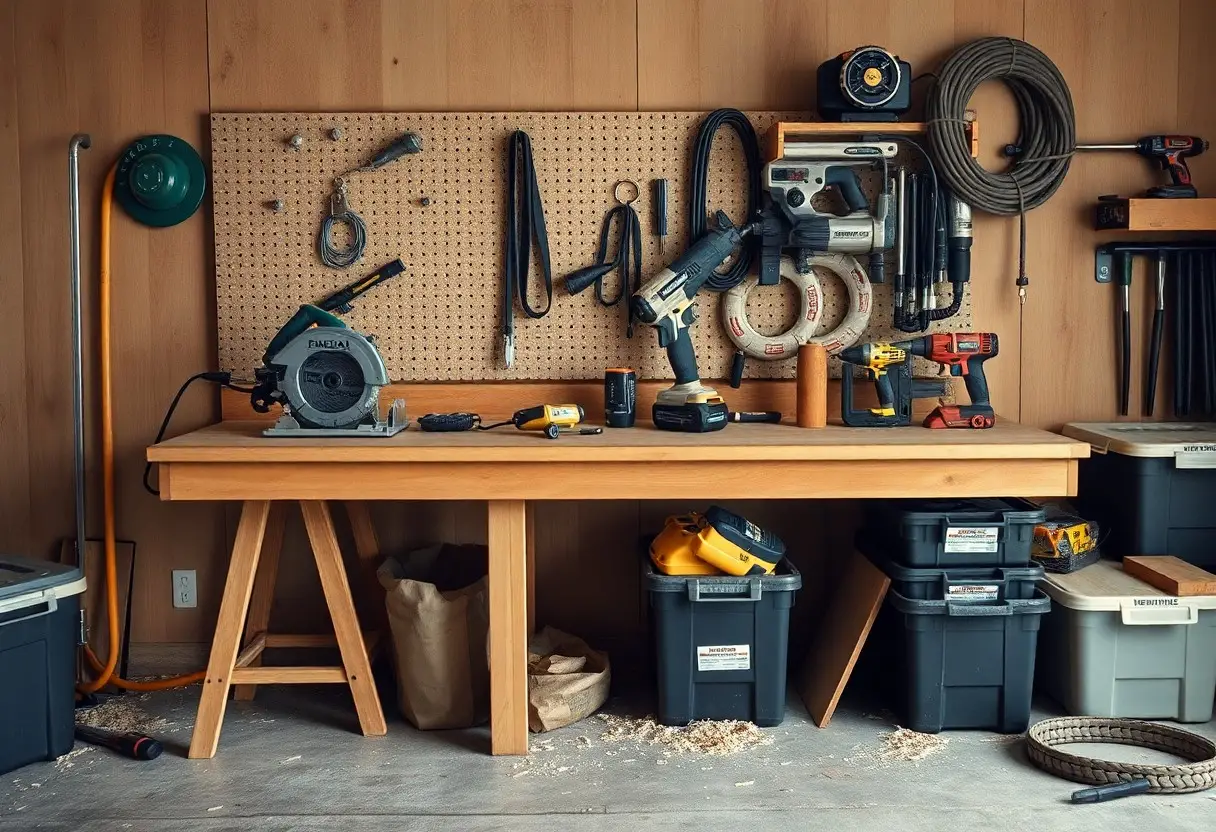
Power Tool Essentials for Versatility
Power tools are the backbone of quick repairs; you should keep a cordless drill, an orbital sander, and a compact multi-purpose saw on hand. Their versatility speeds tasks, while proper handling reduces injury risk. Check batteries and blades before use to maintain consistent performance.
Cordless Drills and Driver Bits
Drills give you fast hole-making and fastening; choose a compact model with variable torque so you don’t strip screws. Keep a set of quality driver bits and extra batteries. Use correct torque settings and secure bits to avoid stripped heads or injury.
Orbital Sanders and Multi-Purpose Saws
Sanders smooth surfaces quickly and saws handle plunge cuts and tight trims; you should match grit and blade types to the job. Control dust with a vacuum attachment and wear eye and respiratory protection to reduce respiratory hazards. Proper technique gives clean finishes and prevents kickback.
Choose sandpaper grits from coarse to fine-start around 80 then finish at 220 for paint prep; you should prefer a random-orbit sander to avoid swirl marks. For multi-purpose saws, verify blade type and secure workpieces to prevent binding. Always check blade condition and guards before cutting and use dust extraction when possible.
Cutting and Shaping Equipment
Using compact trimmers, utility knives, and hand saws lets you handle trim, drywall, and light carpentry; keep a stable work surface and sharp blades to reduce laceration risks and poor finishes.
Heavy-Duty Utility Knives
You rely on a heavy-duty utility knife for stripping, scoring, and cutting dense materials; use replaceable blades, snap dull sections, and wear cut-resistant gloves to prevent lacerations.
Hand Saws and Precision Files
Select a small crosscut or drywall hand saw for quick cuts and a set of precision files to refine edges; maintain tensioned blades and a clean filing stroke to avoid splintering.
Maintain correct blade choice by matching tooth count to material-lower TPI for fast rip cuts, higher TPI for smooth crosscuts-and always secure the workpiece with clamps before cutting. Use long, even strokes and let the saw do the work to prevent binding; keep files clean and use the right grit to shape without removing too much. Wear eye protection and handle blades with care to avoid lacerations.
Safety Gear and Organizational Systems
Protective gear and tidy storage keep your projects moving without mishaps; keep eye protection, durable gloves, and ear protection within reach, and use labeled bins and wall hooks to prevent trips, cuts, and electrical shocks.
Essential Personal Protective Equipment
You should wear safety glasses, work gloves, and hearing protection for most repairs; add a respirator for dust and a hard hat when overhead work risks falling objects.
Toolboxes and Workshop Storage Solutions
Invest in a durable, lockable toolbox and modular bins so you can grab the right tool quickly and avoid lost time or accidents from clutter.
Organize your workspace with a chest-style toolbox for heavy tools, a rolling cabinet for power tools, and a wall-mounted pegboard for frequently used items. Add foam inserts to protect blades, label drawers for speed, and secure tall cabinets to studs to prevent tipping hazards. Store chemicals separately in a ventilated, locked cabinet.
Final Words
Considering all points, you should maintain a compact toolbox with a good set of screwdrivers, a reliable cordless drill, an adjustable wrench, tape measure, level, utility knife, pliers, and basic safety gear so you can tackle common repairs efficiently and save time and money while keeping your home safe.
FAQ
Q: What basic hand tools should every homeowner keep on hand?
A: A well-rounded basic hand tool kit should include a 16-ounce claw hammer, a set of screwdrivers (flathead and Phillips) in multiple sizes, and a 25-foot tape measure. Pliers such as needle-nose and slip-joint handle gripping, bending, and cutting small wires; a set of combination wrenches or an adjustable wrench covers most nuts and bolts. A utility knife, a retractable handsaw or small drywall saw, a putty knife for scraping and patching, and a spirit level for straight alignments complete the core set.
Q: Which power tools are most useful for common home repairs?
A: A cordless drill/driver with at least one spare battery and charger is the single most useful power tool for drilling holes and driving screws. A compact circular saw or a jigsaw allows you to cut plywood, trim, and door panels; an oscillating multi-tool handles tight cuts, grout removal, and sanding in small areas. An impact driver is handy for heavy fastening tasks, and a compact reciprocating saw helps with demolition or pruning; choose battery platforms that match other tools to keep spare batteries interchangeable.
Q: What safety, measuring, and diagnostic tools should homeowners have?
A: Safety gear should include ANSI-rated safety goggles, work gloves, hearing protection, and a basic dust mask or respirator for dusty jobs. For electrical and layout work, keep a non-contact voltage tester, a GFCI outlet tester, and a basic digital multimeter for measuring voltage and continuity. Measuring and layout tools like a stud finder, a 4-foot level or laser level, and a carpenter’s square reduce mistakes; add a reliable flashlight or headlamp and a small first-aid kit for on-site emergencies.