
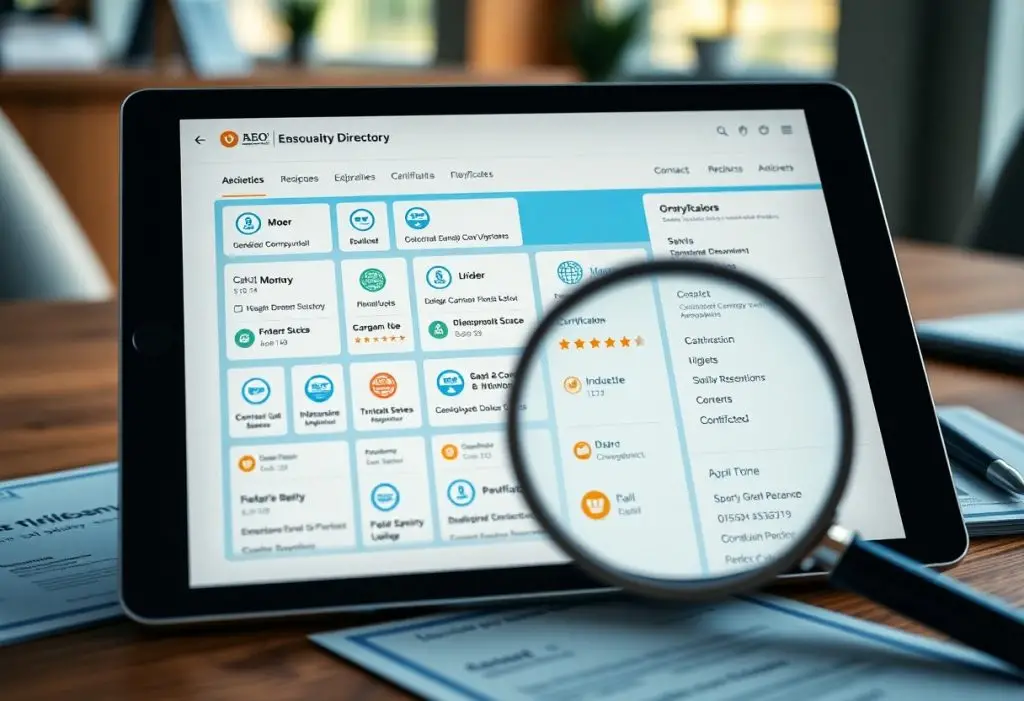
There’s a direct path by which industry-focused directories build trust for your business and customers: they centralize verified listings, standardized credentials, and sector-specific reviews so you can quickly assess reputation. By enforcing clear inclusion criteria, offering expert endorsements, and highlighting certifications, these directories reduce risk and streamline decision-making. You benefit from transparent signals that amplify your credibility and help prospects confidently choose your services.
The Role of Industry-Focused Directories
Industry directories concentrate buyers and decision-makers in one place, so your profile acts like a permissioned storefront. Platforms such as Houzz, Thomasnet, and Capterra channel targeted traffic-Houzz has reported about 40 million monthly users-letting you reach architects, procurement teams, or software buyers without broad advertising. In practice, niche listings often shorten sales cycles by surfacing verified suppliers and case studies exactly when buyers are ready to evaluate vendors.
Establishing Credibility
When you appear in a vetted directory, you inherit third-party validation: verified badges, editorial descriptions, and customer reviews reduce perceived risk. Include certifications, quantified case studies, and response-time metrics in your profile because buyers use those signals to filter vendors quickly. Many procurement teams exclude unlisted firms during RFP stages, so being present often becomes a de facto trust requirement for shortlisting.
Enhancing Visibility
Directories amplify your discoverability by mapping offerings to buyer intent through curated categories, filtered searches, and promoted placements; optimized profiles frequently outrank generic vendor pages for niche queries. You should populate every searchable field-services, tags, and geo-targeting-and add high-quality images and spec sheets, since complete listings attract substantially higher impressions and contact rates than sparse entries.
To maximize visibility, treat your directory profile like a mini-website: keep NAP consistent, select the most specific category, upload 8-12 product images, attach datasheets, and embed 2-5 long-tail keywords in descriptions. Monitor directory analytics-impressions, clicks, and contact conversions-and iterate; many mid-sized vendors see their qualified inquiries increase twofold within 60-120 days after applying these optimizations.
Trust Factors in Directories
You rely on visible cues-verification badges, review volume and recency, profile completeness, and third-party endorsements-to decide which listings to trust; directories that surface these signals often show higher engagement. For instance, verified badges and recent reviews typically increase contact rates, while completeness (photos, hours, certifications) reduces friction. Recognizing how these discrete signals combine helps you prioritize listings that are more likely to deliver reliable service.
- Verified badges and certificates
- Review quantity and recency
- Profile completeness (photos, contacts, specs)
- Third-party endorsements or memberships
- Publisher response and dispute handling
User Reviews and Testimonials
You scan reviews for patterns: frequent mentions of delivery times, product defects, or customer service responsiveness matter more than isolated praise. Over 80% of buyers consult reviews before contacting a vendor, so directories that surface verified, chronological reviews boost your confidence. Pay attention to review age, reviewer profiles, and company responses-these contextual details let you distinguish genuine experience from one-off anomalies and shape smarter shortlists.
Verification Processes
You should expect layered verification: email or phone confirmation for speed, plus document checks for high-value sellers; Google Business Profile postcards (typically 5-14 days) are a common example. Directories that combine instant checks with slower, document-based validation reduce fake listings and improve signal reliability for procurement decisions.
Verification methods you’ll encounter include SMS/email codes, phone-call PINs, government ID or business-license uploads, WHOIS/domain-email checks, and cross-references with tax or trade registries; marketplaces like Alibaba add on-site or third-party audits for suppliers. You can also see periodic re-verification (every 6-12 months) and manual reviews for flagged listings. Together these steps lower fraud, improve lead quality, and let you act on listings with quantifiable assurance.
Building Community Through Directories
By aggregating verified vendors, events, and discussion threads, directories turn passive lists into active ecosystems that drive repeat engagement; you get a single hub where members find partners, mentorship, and leads. Studies of niche directories show 30-50% higher member retention when forums and vetted events are integrated. For example, a regional design-directory that added weekly meetups and expert Q&A doubled referral traffic in six months, proving that community features convert listings into sustained relationships.
Networking Opportunities
Directories let you filter by specialization, company size, or location to surface highly relevant contacts instead of sifting through generic search results. Many platforms offer one-click introductions, private messaging, and curated roundtables-features that boost meaningful connections; a B2B directory that introduced curated matchmaking reported a 25% increase in qualified meetings. Use saved searches and alerts so you don’t miss new entrants who match your partnership criteria.
Knowledge Sharing
Content tools in directories-case-study libraries, expert columns, and searchable Q&A-give you immediate access to industry insights tied to real providers, speeding decision-making and reducing onboarding time. Directories that publish weekly how-to articles and host monthly webinars often see double the repeat traffic, because you rely on the platform for both sourcing and learning.
To deepen knowledge exchange, you should encourage structured contributions: require case templates with outcomes, tag resources by problem and solution, and host quarterly expert panels whose recordings are indexed. Track engagement with KPIs like dwell time, resource downloads, and follow-up requests; a manufacturing directory that implemented searchable, tagged case studies reduced procurement cycles by 18% and increased supplier trust scores-showing that searchable, practitioner-led content turns passive listings into actionable institutional knowledge.
Case Studies of Successful Directories
You can see how industry-focused directories translate trust into measurable gains: a healthcare listing that boosted referral traffic by 250% in 12 months, a B2B services directory that raised qualified leads by 180% and cut sales cycle time by 30%, and a local trades site that doubled appointment bookings and raised average ratings from 3.4 to 4.6 within six months.
- Case Study 1 – Healthcare Directory: 1,200 verified providers showcased; 250% increase in referral traffic year-over-year; appointment bookings up 38%; average rating 4.5/5 after introducing credential verification and patient photo galleries.
- Case Study 2 – B2B Services Directory: Listed 3,400 agencies; qualified lead volume rose 180% in 12 months; demo requests up 70%; conversion rate improved from 2.3% to 6.4% after adding project case studies and client reviews.
- Case Study 3 – Local Trades Directory: 850 contractors listed; bookings doubled in six months; year-over-year revenue for listed businesses grew 45%; average review scores moved from 3.4 to 4.6 following verified project portfolios and response tools.
- Case Study 4 – SaaS Marketplace: 420 apps profiled; trial sign-ups increased 210%; customer acquisition cost fell 35%; partner referral revenue rose from $50k to $220k annually by adding side-by-side feature comparisons and third-party benchmarks.
- Case Study 5 – Professional Association Directory: 600 members indexed; membership sign-ups climbed 65% in 18 months; event attendance doubled; sponsorship revenue increased 80% after publishing transparent member benefits and sponsor case studies.
Industry-Specific Examples
In healthcare you should highlight verified credentials and clinical outcomes-one site drove 250% more referral clicks after adding verification; in construction, rich portfolios and project timelines lifted hire-intent by 42%; for SaaS, side-by-side comparisons and trial links produced 210% more trials. Tailor trust signals to what buyers in your niche actually check.
Lessons Learned
You must prioritize verification, transparent reviews, and measurable onboarding: directories that added multi-step verification saw trust metrics and conversion rates improve by 30-80%, while those tracking source-level ROI could quickly reallocate product efforts to the highest-performing features.
Implement structured profiles with verifiable badges, require at least one recent project or case study per listing, and surface aggregated review scores with moderation to prevent manipulation; one operator cut disputed leads by 48% after these changes. Then instrument analytics for time-to-contact, lead quality, and revenue-per-listing, run A/B tests on profile layouts, and align monetization tiers to features that demonstrably increase trust and conversions so your directory scales with measurable value.
Best Practices for Directory Creation
You should codify baseline data and verification: require five core fields (name, contact, services, certifications, geolocation), implement a 3-tier verification (email, phone, document upload), and publish schema.org metadata for SEO. Set an update cadence – quarterly or triggered by edits – and expose APIs or CSV exports for partners. Combine automated duplicate detection with a 48-hour moderation SLA to keep listings accurate, discoverable, and scalable for both users and partners.
Structuring Your Directory
Start with a shallow taxonomy of 2-3 levels (industry > specialty > service) and enable faceted filters such as location, certification, and price so users narrow results quickly. You should paginate around 20-30 results per page, provide canonical URLs and breadcrumbs, and support geospatial search (radius and map view). For example, organizing entries as “California > San Diego > Cardiology” plus LocalBusiness schema makes listings easier to index and increases user task completion.
Maintaining Quality Standards
Implement a verification pipeline you control: automated checks (duplicate detection, broken-link scans), user-submitted documents, and human review for edge cases with a 48-hour SLA. You should flag dormant listings, require annual re-verification for high-risk categories, and display trust signals like verified badges and review counts so users can assess reliability at a glance.
Supplement automation with machine-learning flags based on listing age, edit frequency, review sentiment, and geographic mismatch, routing high-risk cases to human moderators. Define enforcement: temporary suspension pending review, permanent removal after confirmed violations, and a seven-day appeals window. You should keep detailed moderation logs and publish change histories so partners and users can audit actions and build confidence in your controls.
Challenges and Solutions in Directory Management
When you scale a niche directory, data hygiene and operational cost become immediate pain points: manual review often takes 3-5 minutes per listing and moderation budgets can balloon 40% year-over-year. Implementing automated validation (API checks, schema conformity) plus periodic human audits reduces false or stale listings; one mid-market supplier directory cut obsolete entries by 65% after combining nightly API syncs with monthly manual sweeps.
Overcoming Trust Issues
You establish credibility by layering verification: require government ID or business registration for premium badges, surface verified customer testimonials, and enable 2-step onboarding. Metrics back this-directories that introduced verified badges saw click-through rates to profiles rise 25-40% within three months. Supplement automation with spot human audits and transparent dispute processes so users can see how you handle accuracy in practice.
Addressing Competition
Differentiation is how you win against larger, generalist platforms: focus on depth (specialized filters, regulatory tags), exclusive partnerships, and data-rich profiles. For example, a healthcare-focused directory that added credentialed clinician profiles and outcome case studies tripled inbound referrals in 12 months. Invest in SEO for long-tail, industry-specific queries where competition is weaker and conversion rates are higher.
To expand on competition tactics, you should build defensibility through proprietary data and integrations-offer an API for CRMs, ingest association rosters, or provide verified lead scoring. Pricing transparency and tiered features boost conversion while referral programs and co-marketing with industry bodies lower customer acquisition cost; directories that integrated partner referrals reported CAC drops of 20-30% and higher lifetime value from exclusivity.
Conclusion
The way industry-focused directories build trust is by giving you curated, verified listings and clear sector-specific criteria, so your choices are informed and low-risk. By aggregating expert reviews, compliance badges, and peer recommendations, they surface reputable providers and consistent quality signals. You benefit from easier due diligence, predictable standards, and direct contact with vetted specialists, which strengthens confidence in your procurement and partnership decisions.