
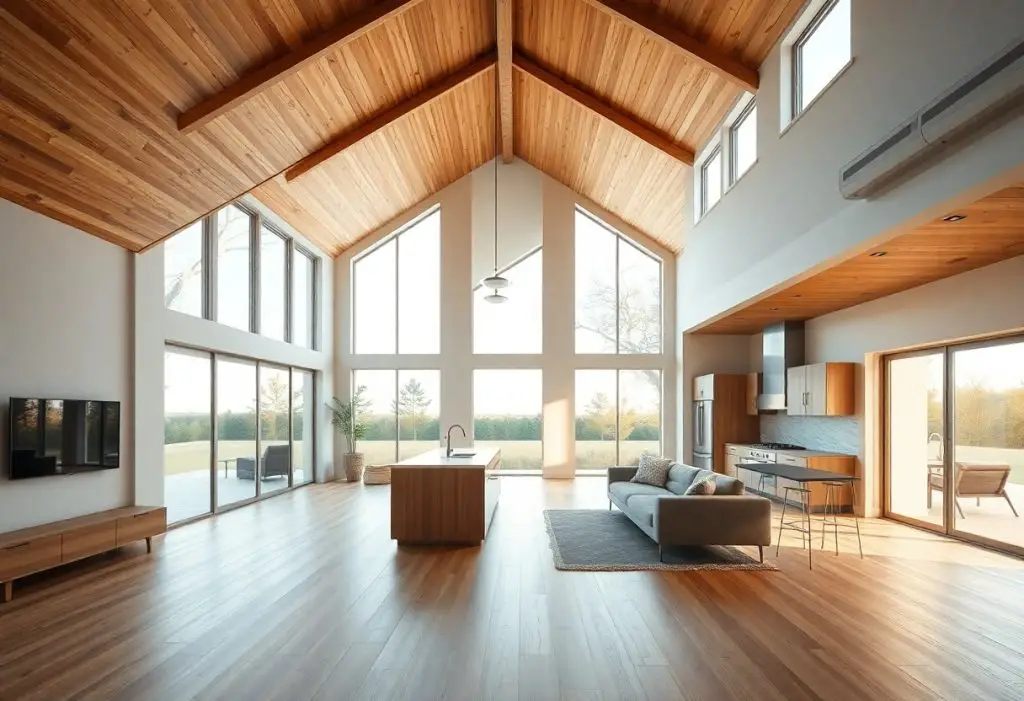
Floor plans that remove unnecessary walls can transform your home into a bright, connected space. You gain flexibility in furniture arrangement, improve natural light flow, and create areas that feel larger and more inviting. Smart zoning, consistent flooring, and strategic lighting help define spaces without barriers. These ideas give you practical ways to maximize openness and functionality in your living area.
The Architecture of Air
Breaking the Barrier of Walls
You remove solid partitions to redefine how space feels and functions. Openings between rooms invite light and movement, transforming tight zones into airy expanses. Without bulky walls, your living area breathes easier, connecting kitchen, dining, and lounge in one fluid experience.
The Flow of Uninterrupted Sightlines
Your eye travels freely from one end of the room to the other, unobstructed by clutter or closed-off spaces. This visual continuity makes even modest square footage feel larger and more inviting. Clear sightlines enhance brightness and create a natural rhythm between zones.
Uninterrupted sightlines do more than expand perception-they shape how you interact with your home. When you can see the kitchen from the sofa or the entry from the dining table, spaces feel connected and purposeful. Natural light moves deeper into the floor plan, reducing shadows and emphasizing clean lines. You begin to experience rooms not as isolated boxes but as parts of a unified whole, where activity flows as freely as your gaze. This openness supports both social engagement and personal comfort, making daily life feel more intuitive and calm.
Curating the Vastness
Open spaces invite creativity, but they also demand thoughtful curation. You’re not just filling a room-you’re shaping an experience. Every piece you choose contributes to the balance between openness and comfort, guiding how light, movement, and function flow through your home.
Furniture with Purposeful Grace
Each item you place should serve a clear role while enhancing the room’s aesthetic. Choose seating that supports conversation, tables that offer utility without bulk, and storage that blends into the design. Function and beauty work together to keep the space feeling intentional and calm.
Floating Arrangements for Fluid Movement
Positioning furniture away from walls creates intimate zones within the larger space. This approach encourages natural pathways and invites interaction. You gain flexibility in how areas are used, allowing the room to breathe while maintaining a sense of connection and flow.
Leaving furniture free-standing transforms how you experience the room. Without being pushed to the perimeter, pieces become anchors for distinct zones-like a seating cluster that faces both the kitchen and the view. This method supports easy navigation, improves sightlines, and adds visual depth, making the open floor plan feel dynamic yet harmonious.
The Illusion of Infinite Space
You can make your open floor plan feel larger than its actual footprint by manipulating light, color, and reflection. Strategic design choices subtly shift perception, turning compact areas into airy expanses. The goal isn’t deception-it’s enhancing how space feels as you move through it.
Pale Palettes and Luminous Tints
Soft whites, warm grays, and muted beiges reflect more light, helping walls recede visually. You’ll notice corners feel less confined and transitions between zones become smoother. These tones create a calm backdrop that lets architecture and furnishings stand out without overwhelming the eye.
Mirrors as Windows to Elsewhere
A well-placed mirror mimics a window by introducing depth where none exists. You gain the sense of another room beyond, even in closed layouts. This trick works especially well opposite light sources, amplifying brightness and visual reach.
Positioning a large mirror on a wall facing a window doubles the impact of natural light and pulls the outdoors in. You might frame it like a picture window to reinforce the illusion. Consider leaning a floor mirror near a seating area or mounting one to bounce views across the space-each angle adds dimension without clutter.
Crafting Intimate Islands
Create cozy zones within your open floor plan by defining distinct areas that serve specific purposes. You don’t need walls to shape space-strategic furniture placement and lighting can guide how you experience each zone. Let each island breathe with its own rhythm while staying connected to the whole.
Rugs as Invisible Boundaries
Anchor your seating groups with area rugs that visually separate spaces without blocking flow. You’ll notice how a well-placed rug defines the living area from the dining zone, adding warmth and texture underfoot while maintaining sightlines across the room.
The Art of the Shared Hearth
A fireplace positioned between zones invites shared moments while subtly dividing spaces. You can face seating on opposite sides to create dual conversation areas, letting warmth and glow serve as a natural centerpiece for both living and dining functions.
Positioning a fireplace centrally allows it to act as a quiet divider that doesn’t disrupt sightlines or traffic patterns. You gain a focal point that draws people in from multiple angles, making it easy to enjoy from the sofa or the dinner table. Choose a sleek, double-sided design or a modern freestanding unit to enhance openness while still delivering comfort and visual balance.
Vertical Aspirations
Height draws the mind into space, making rooms feel larger than they are. You can use vertical elements to enhance the perception of openness in your living area. Focus on upward movement in design to unlock the full potential of your open floor plan.
Drawing the Eye Upward to the Rafters
Exposing wooden beams or painting the ceiling a bold color pulls attention skyward. You create a sense of volume when sightlines travel up instead of stopping at walls. This simple shift in focus expands your space without adding square footage.
High Shelving and Lofted Dreams
Installing shelves near the ceiling adds storage while guiding the eye upward. You gain functional space without cluttering the floor. Lofted reading nooks or mezzanines take advantage of unused air space, blending utility with architectural interest in your open layout.
Reaching high with built-in shelving turns empty wall space into a dynamic feature. You can display books, plants, or art without sacrificing floor room. When combined with a lofted area, these vertical solutions create distinct zones in an open floor plan, giving you both privacy and continuity in design.
The Radiance of the Sun
Light transforms how space feels, and in open floor plans, natural illumination enhances the sense of airiness. Position key living areas where daylight flows freely, reinforcing visual continuity across zones. Let the sun define the rhythm of your rooms, shaping moments from morning to evening with warmth and clarity.
Maximizing the Golden Hour
Position seating and workspaces to face west-facing windows to catch the soft glow of late afternoon light. During golden hour, this warm, diffused sunlight fills the open area with a welcoming ambiance. You’ll notice how it highlights textures and deepens the connection between kitchen, dining, and living zones.
Sheer Textures for Softened Light
Sheer curtains allow daylight to filter gently while preserving views and spatial openness. Choose lightweight fabrics like linen or voile in neutral tones to diffuse harsh rays without closing off the room. This subtle layer adds softness without compromising the brightness necessary to your layout.
Sheer textures do more than filter light-they add a tactile dimension that complements sleek surfaces common in open layouts. When sunlight passes through, it casts delicate shadows and creates a calming atmosphere. You can layer them with blinds or leave them bare for uninterrupted flow, giving you flexible control over privacy and illumination throughout the day.
Summing up
Summing up, an open floor plan enhances your living area by improving light flow and creating visual continuity between spaces. You gain flexibility in furniture arrangement and foster better interaction among occupants. Strategic use of rugs, lighting, and partial dividers helps define zones without sacrificing openness. Your space feels larger, more inviting, and functionally efficient.