
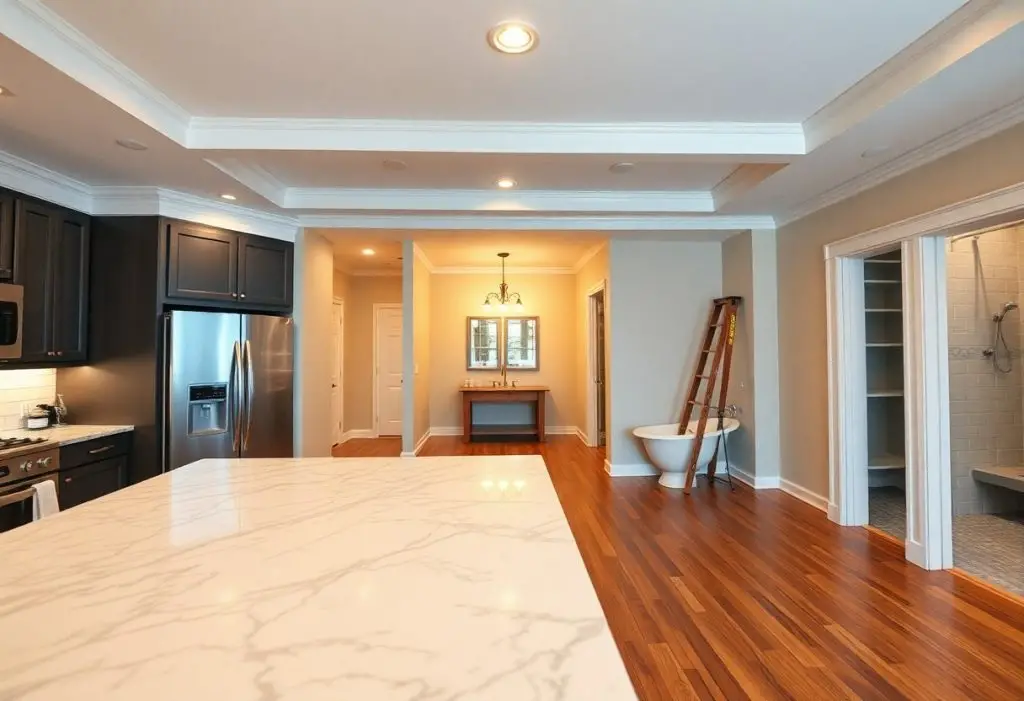
Many homeowners choose professional home improvement to upgrade kitchens, bathrooms, bedrooms, and outdoor areas. You gain expert design, licensed craftsmanship, and compliance that boost comfort and resale value.
Kitchen Modernization: The Intersection of Style and Utility
Kitchen design balances form and function, letting you create efficient workflows, choose durable finishes, and implement lighting that supports daily tasks while maintaining a cohesive aesthetic.
Custom Cabinetry and Premium Surface Selection
Craft bespoke cabinetry to match your storage patterns, and pick premium countertops and backsplashes that withstand wear, simplify cleaning, and reflect your chosen style.
Professional Grade Appliance Integration
Install professional-grade appliances with correct clearances and power specifications so you can achieve consistent performance, energy efficiency, and a coordinated visual profile.
Plan electrical circuits, gas lines, and ventilation to meet manufacturer requirements, and select panel-ready or built-in units for a cohesive finish. You should confirm load capacity, allow service access, and hire licensed technicians for installation and calibration to protect warranties and long-term reliability.
Living and Dining Areas: Enhancing Social Flow
Living and dining zones should guide how you move and gather, with furniture arranged to encourage conversation, clear walkways, and layered textures that invite lingering without blocking circulation.
Architectural Millwork and Decorative Finishes
Custom millwork frames your space, offering concealed storage, seating nooks and cohesive trim, while tailored finishes like paint, veneer or plaster unify materials and reflect your design intent.
Lighting Design and Integrated Smart Systems
Thoughtful lighting layers ambient, task and accent sources so you can shift moods for meals, entertaining or quiet evenings, with integrated controls simplifying adjustments across scenes.
Controls allow you to create scenes for dining, hosting and day-to-day routines, combining dimmers, tunable white LEDs and motorized shades so you can set atmosphere from a wall panel or app. Sensors and voice integration give you hands-free convenience, and professional programming aligns schedules, improves energy use and keeps performance consistent across zones.
The Master Suite: Engineering a Private Sanctuary
Your master suite should function as a private retreat: controlled lighting, soundproofing, and flexible layouts support rest and focused work. Specify high-quality finishes and HVAC zoning so you control comfort without compromising style.
Luxury Bathroom Renovations and Spa Features
Choose fixtures and finishes that prioritize comfort and durability, such as thermostatic showers, heated floors, and a steam or soaking tub; plan layered lighting and concealed storage to keep the space calm and functional.
Precision Storage and Walk-in Closet Design
Optimize closet layouts with adjustable shelving, defined zones for shirts, pants and accessories, plus integrated lighting and clear sightlines so you can access items quickly; custom drawers, pull-out shoe racks and valet rods match your routine.
Consider proportions and workflow when designing a walk-in: allocate about 24 inches depth for single hanging rows, 40-48 inches for dressing aisles, and a 36-inch minimum walkway. Include adjustable shelving, stackable drawers, dedicated shoe compartments and a mix of open and closed storage. Add task lighting, a full-length mirror, ventilation and soft-close hardware. Work with a professional to verify measurements, materials and installation for daily use and resale value.
Home Office Optimization for Maximum Productivity
Optimize your workspace by positioning your desk near natural light, prioritizing clear sightlines, and allocating dedicated storage so you can minimize distractions and sustain productivity during long sessions.
Ergonomic Spatial Planning and Acoustic Privacy
Arrange ergonomic furniture with adjustable height and lumbar support, create defined task zones, and add absorptive panels or a portable screen so you can protect privacy and reduce noise for focused calls.
Dedicated Electrical and Connectivity Upgrades
Install dedicated circuits, surge protection, and plentiful outlets, combine wired Ethernet drops with strategic access points, and provision power for printers, monitors, and a UPS so you can avoid outages and bottlenecks.
Consider specifying 20A circuits for high-draw equipment and separating office loads from kitchen or HVAC circuits to prevent nuisance tripping. Run dedicated conduit for future cabling and terminate wired drops in a small patch panel or enclosure. Specify Cat6a or better for gigabit-plus speeds and PoE for phones and cameras, add a UPS for critical gear and whole-office surge protection, label circuits and outlets, route cables in raceways, and hire a licensed electrician to ensure code compliance and safe installation.
Structural Conversions: Basements and Attics
Converting basements and attics requires planning: you should assess access, ceiling height, and load-bearing walls, secure permits, and hire professionals to ensure safe, code-compliant living spaces.
Moisture Control and Insulation Standards
Manage moisture by installing vapor barriers, interior drainage, and proper ventilation so you prevent mold; meet local insulation R-values and add continuous air sealing for energy efficiency.
Multi-Purpose Layouts for Increased Square Footage
Design multi-purpose layouts with clear zones, built-in storage, and flexible furniture so you can switch a room between office, guest suite, or play area without major renovation.
Plan plumbing and electrical locations to support kitchens or baths, position windows and layered lighting for task and ambient needs, install zoned HVAC and sound insulation, and integrate concealed storage so you maximize function while preserving resale appeal; consult architects or contractors to align layout with structural limits and code.
Exterior Performance and Curb Appeal
Exterior upgrades improve durability and street presence; you should prioritize siding, trim, and entry updates that reduce maintenance and protect against weather while boosting resale value.
Energy-Efficient Siding and Window Replacement
Upgrading siding and windows cuts energy costs and increases comfort; you should choose insulated materials, low-E glass, and professional installation to prevent drafts and moisture problems.
Professional Hardscaping and Outdoor Living
Professional hardscaping defines usable outdoor spaces and improves drainage; you can add patios, retaining walls, paths, and lighting that complement your home’s style while meeting code and maintenance needs.
Consider hiring specialists who manage grading, drainage, durable pavers, integrated lighting, built-in seating, and outdoor kitchens; they secure permits, ensure proper base compaction, and create low-maintenance solutions so you enjoy a functional outdoor living area tailored to how you use your yard.
Conclusion
To wrap up, you can rely on professional home improvement to handle design, repairs, and efficiency for every room, delivering consistent quality, greater comfort, and increased property value when you hire skilled contractors and set clear goals.