
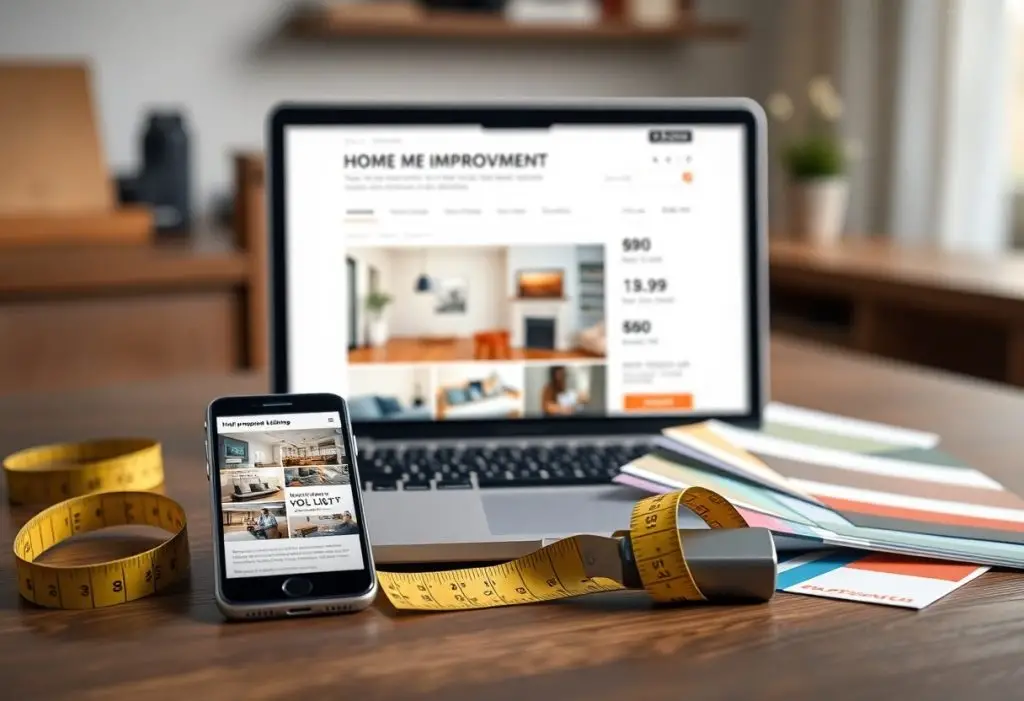
It’s necessary to list your home improvement business strategically, optimizing profiles with clear services, professional photos, accurate contact info and customer-focused descriptions so prospective clients find and trust you quickly; use targeted keywords, consistent NAP data, verified listings and reviews to increase visibility and convert searches into booked jobs.
Understanding Your Target Market
Identifying Your Ideal Customers
Define your segments by age, home type, budget and project need: you might focus on 30-55-year-old homeowners in suburbs with household income above $75,000 seeking kitchen or bathroom remodels. Use lead data to refine-track which ZIP codes deliver the most calls and which project sizes (e.g., $10,000-$50,000 vs $50,000+) convert best, so you can tailor listing copy, photos and price cues to match actual demand.
Analyzing Competitor Listings
Audit the top five competitor listings in your service area for keywords, pricing cues, photo quality and review response; note frequency of phrases like “same-week estimate” or “licensed & insured.” If several list starting prices of $5,000-$15,000 or emphasize fast response times, you should consider matching those signals in your headline and pricing hints to avoid losing attention on first view.
Turn findings into a checklist for your own listing: track headline wording, number of photos, average review score and the most common client complaints, updating weekly. For example, a contractor who adopted a competitor’s 12-photo gallery and added “free design consult” reported a 35% increase in inbound requests within two months; run A/B tests on title and first image to quantify what actually lifts your lead rate.
Crafting an Effective Business Profile
Lead with a concise summary of services, then list your service area (e.g., 25‑mile radius), license or certification numbers, years in business (est. 2012) and completed projects (1,200+). Emphasize core specialties (kitchen remodels, roof replacements), include turnaround times (kitchens in 3-5 weeks) and end with a one-line CTA for calls or online booking so prospects can act immediately.
Highlighting Your Unique Selling Propositions
Choose 3-4 measurable USPs and state them plainly: a 10‑year workmanship warranty, 24‑hour emergency response, assigned project manager, or 0% financing options. Give specifics where possible (average response time: 4 hours; typical project duration: 2-4 weeks). For example, one roofing contractor increased inbound leads ~30% after promoting a 10‑year warranty plus flexible financing.
Utilizing Professional Imagery
Profiles with photos drive real action-businesses with images see ~42% more direction requests and ~35% more website clicks-so include at least five images: before/after, completed projects, team, process, and branded shots. Caption each with project details, materials used, and neighborhood to build trust and local relevance.
Use high‑resolution files (minimum 720×720 px; ideally 1024-2048 px), prefer landscape for jobsite shots and portrait for team/headshots, and keep consistent lighting and angles for before/after comparisons. Hire a pro for flagship projects, geotag images, name files with keywords (e.g., “oak-kitchen-remodel-cityname.jpg”), and add short captions with dates and materials to improve SEO and conversion.
Leveraging Online Marketing Strategies
Search Engine Optimization for Your Listings
Optimize your listing title and primary category with one or two geo-targeted phrases (e.g., “kitchen remodeler Austin”) and include 3-5 service keywords in the description. Add at least five high-quality photos and a short project video to increase clicks. Maintain consistent NAP across Google, Yelp and Facebook and build citations on 5-10 local directories. Use schema markup on your site and ask satisfied customers for reviews, responding to them within 48 hours to improve visibility.
Social Media Engagement Techniques
Post 3-5 times weekly and prioritize short video: 15-60 second reels or time-lapse clips of your projects. Use geotags, local hashtags and before/after carousels to drive discovery. Run small targeted ad tests ($5-20/day) focused on a 10-20 mile radius and A/B test two creatives and two CTAs. Capture leads with a single-purpose landing page and your clear booking CTA, then retarget visitors with 7-14 day follow-up ads.
Create a weekly content calendar: Monday before/after photo, Wednesday tip or DIY clip, Friday time-lapse or customer testimonial, plus one paid boost midweek. Track engagement rate, click-through rate and lead conversion and aim for 2-5% engagement on your organic posts. Use UTM tags to measure channels, build 14-30 day retargeting audiences from site visitors, and seed a 1% lookalike once you have 500+ tracked conversions for scalable prospecting.
Collaborating with Local Home Improvement Networks
You can amplify visibility and leads by plugging into established local networks-supplier co-ops, trade associations, and chamber groups-and co-marketing with complementary businesses. For example, partnering with 3-5 contractors and running a joint weekend demo at a community center can boost walk-in leads by 20-40%. Use shared email blasts, combined booth costs, and cross-promoted social ads to split expenses and multiply impressions quickly.
Building Partnerships with Local Contractors
Start by mapping 3-5 complementary trades-plumbers, electricians, landscapers-and propose a formal referral agreement with a 5-10% commission or reciprocal referrals. Draft a simple MoU outlining response times, lead tracking, and bundled service packages; one kitchen remodeler who formalized four such partnerships increased closed projects 25% year-over-year. Keep communication weekly and share customer feedback to refine offerings.
Joining Relevant Community Groups
Join platforms like Nextdoor, Facebook neighborhood groups, and the local homeowners association, targeting groups with 1,000+ members and active weekly threads. Post 2-3 helpful tips or before/after photos per week, respond within 24 hours, and run a group-only promo to measure conversion; in a town of 50,000, consistent Nextdoor activity produced roughly 30 qualified leads in six months for one contractor.
When engaging, prioritize value: share short how-to videos, 3-photo project progressions, and one-page cost breakdowns to build trust. Aim for a 3-5% engagement rate and track metrics-comments, direct messages, and booked estimates-to know what resonates. For instance, offering a 10% group-only discount plus monthly Q&A sessions led one local company to boost booked estimates by 18% within three months.
Customer Reviews and Testimonials
The Importance of Customer Feedback
With over 80% of consumers consulting online reviews before hiring a contractor, your customer feedback directly affects lead volume and local search visibility. Search engines weight star ratings and recency, so a steady stream of detailed, photo-backed testimonials can boost conversion; many contractors report 20-40% more inquiries after improving review quality and frequency.
Strategies for Requesting Reviews
Ask within 24-72 hours of completion-during the final walkthrough or immediately after via SMS with a direct Google/Yelp link-and keep the request short and specific: name the project, thank them, and include one-click steps or a QR code on your invoice to remove friction.
Automate the process in your CRM: send an initial SMS, a reminder at 3 days, and a final nudge at 10 days; include before/after photos to make leaving a review easier. Avoid paid incentives that violate platform rules; instead offer to feature the customer in your project gallery. One remodeler doubled monthly reviews in six weeks by using automated SMS plus a gallery feature.
Tracking and Analyzing Performance
You measure campaigns, bookings, and technician productivity weekly to spot trends before they cost you jobs. Track contacts, booked jobs, average ticket, and lead source side-by-side; a drop from 8% to 5% conversion signals a funnel issue, while a steady 30% rise in organic leads after a local SEO push shows what to scale. Use dashboards that update daily so you act on patterns, not anecdotes.
Setting Key Performance Indicators
Pick KPIs that map to revenue: leads per week, lead-to-booking conversion rate, average job value, revenue per technician, repeat-customer rate, and CSAT. For example, aim for 12 leads/week, a 20% booking rate, and $3,500 average job value – that combination projects about $8,400/month per tech. Review KPIs monthly and benchmark against past 3-6 months to spot improvements or declines.
Utilizing Analytics Tools for Continuous Improvement
Use Google Analytics and Search Console for website behavior, Facebook/Google Ads managers for campaign metrics, CallRail for call attribution, and your CRM (Jobber, ServiceTitan) to tie leads to revenue. Create goal funnels, segment by traffic source, and set automated alerts for KPI dips. When form conversions climb from 2% to 4% after a landing-page change, you’ve validated a repeatable win.
Tie online activity to offline sales with UTMs and call-tracking numbers, then import offline conversions into Google Ads to calculate true ROAS (revenue ÷ ad spend). Run weekly cohort analysis and A/B tests on ads and landing pages; if Campaign A yields a $12,000 job from $2,400 spend, that’s a 5x ROAS and a candidate for scaling while you pause underperformers.
Final Words
The smart approach to listing your home improvement business is to craft clear, benefit-focused descriptions, high-quality photos, and accurate service categories so you attract targeted leads; you should maintain prompt communication, solicit reviews, track performance, and refine your pricing to grow your reputation and revenue.