
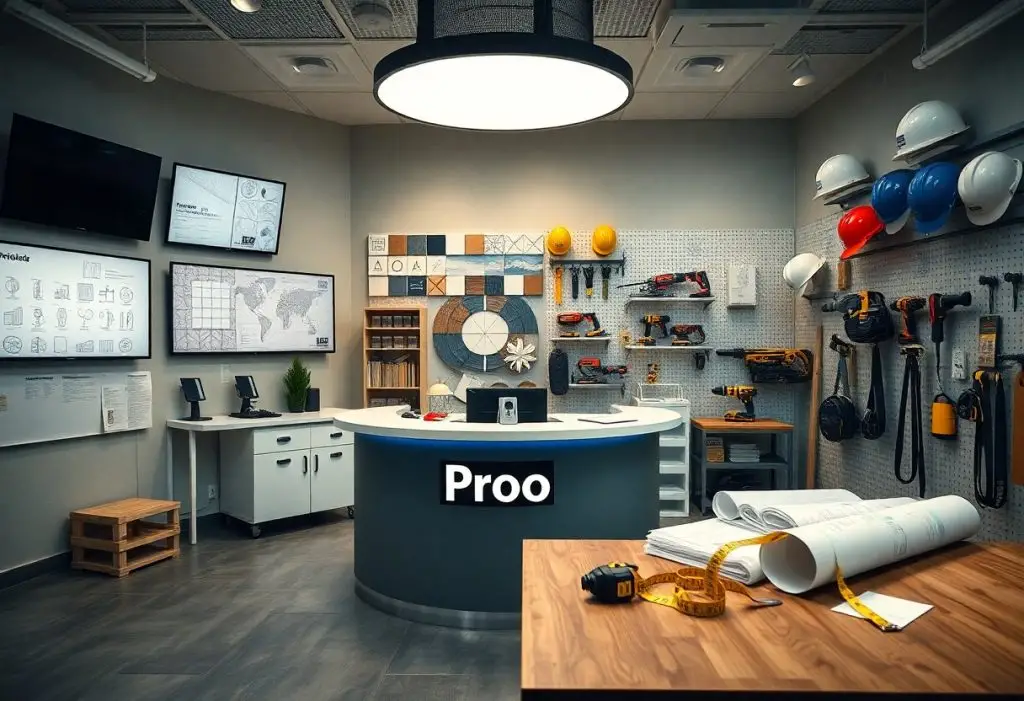
Home professionals like you benefit from a centralized platform that consolidates project management, bidding, supplier sourcing, licensing records, and client communication into one secure, searchable interface, enabling you to win jobs faster, improve workflows, monitor profitability, and scale your business with reliable tools and industry-specific resources.
Overview of the Home Improvement Industry
You operate in an industry where U.S. homeowners spend well over $400 billion annually on renovations, driven by aging housing stock (median home age ~40 years) and steady resale-value math that favors kitchen and bath upgrades. National chains and online marketplaces have compressed margins, while mid-size remodelers capture niche high-margin work; firms that specialize in energy retrofits or accessibility modifications often see higher average ticket sizes and repeat business from aging-baby-boomer demographics.
Current Trends
Smart-home adoption and energy-efficiency upgrades lead demand, with connected devices and heat-pump retrofits moving from novelty to mainstream; smart thermostats and solar tie-ins are common upsells. You’re also seeing pro-oriented offerings from big-box retailers, growth in remote quoting via video, and tighter integration of CRM and project-management tools to cut lead-to-contract time-platforms that reduce scheduling friction often increase booked jobs by measurable margins in competitive metros.
Key Challenges
Skilled-labor shortages and material-price volatility are persistent headaches: the average trade-worker age hovers around 42, and commodity swings (lumber surged roughly 200% in 2020-21) wiped out many thin-margin bids. You also face permitting delays that add weeks to timelines, fragmented local regulations that complicate scaling, and rising customer-acquisition costs as digital ad CPMs climb.
To mitigate these pressures you can invest in apprenticeship programs, form supply partnerships or lock-in contracts to stabilize input costs, and adopt digital pre-construction tools to reduce errors and change orders. For example, contractors who standardize scopes with templated scopes and clear change-order terms shorten cycle times and protect margins; pairing that with financing options for customers and staged payment schedules helps you convert higher-ticket projects while managing cash flow and risk.
The Role of a Central Hub
By consolidating CRM, job scheduling, estimates, invoicing, inventory and field notes into one platform, you cut data handoffs and errors; for example, pulling a client’s full history and previous change orders in under 10 seconds lets you quote faster and avoid duplicate work. Field teams handling 20-30 jobs weekly report saving 2-4 hours per project manager and fewer admin cycles, so projects stay on schedule and materials arrive when crews expect them.
Benefits for Professionals
You gain clearer oversight, faster bidding and better cash flow: generating a quote directly from an on-site measurement can make you 3x faster at closing leads, while integrated invoicing shortens payment cycles by days. Small firms see operating costs drop 10-20% by reducing paperwork and travel for approvals, and subcontractor coordination tightens because everyone references the same job file and schedule in real time.
Streamlining Communication
When messages, RFPs and change requests flow through a central hub, you eliminate fragmented threads across email, text and sticky notes; a single comment thread with time-stamped photos and versioned plans means your crew and client see the same update. That clarity reduces on-site rework and miscommunications, and lets you assign tasks with precise ETAs and materials lists instantly.
In practice you can route an incoming client photo to the estimator, attach markup tools, and push the updated scope to field crews within minutes; automated SMS or app notifications deliver ETA changes and permit quick approvals. Integrations with GPS and time tracking cut travel delays by up to 30% for crews, while audit trails and timestamped approvals lower disputes and help you maintain warranty records without extra effort.
Essential Features of a Central Hub
Integrated CRM, scheduling, invoicing, file storage, and reporting in a single hub let you eliminate app-switching and reduce admin time by up to 30%. For example, a 12-person remodeling firm managing 50 projects a year consolidated tools and cut paperwork by 40%, improved invoice turnaround from 14 to 6 days, and gained real-time visibility into labor and materials spend.
Project Management Tools
Robust project tools give you Gantt charts, mobile tasking, photo logs, and change-order workflows so teams of 3-10 coordinate on-site without constant calls. You can assign tasks, set milestones, and track budget variance versus estimate; one contractor reported reducing schedule conflicts by 60% after adopting automated daily checklists and integrated punch-list tracking.
Networking Opportunities
Built-in networking connects you to 1,000+ vetted subcontractors, suppliers, and local peers, speeding sourcing and increasing qualified leads. You’ll join trade-specific groups, share vetted referrals, and access lead pools that helped a general contractor expand its supplier network by 35% and win 15% more bids in a year.
You should rely on rating systems, verified work histories, and local meetup tools to turn contacts into recurring partners. Require three references, prioritize partners with average ratings of 4.5+ and on-time completion rates above 90%, and use response-time metrics (under 24 hours) to shortlist vendors; one regional exchange produced 200 referral leads for a mid-size firm in six months.
Integrating Technology in Home Improvement
You can combine laser distance meters (Bosch GLM50, ±1/16″) with AR visualization and cloud project platforms to tighten workflows: laser measures speed site takes, Houzz View overlays materials in clients’ rooms at scale, and cloud PM tools coordinate schedules, selections, and invoices. For example, linking SketchUp models to Buildertrend scheduling exposes sequencing conflicts before crews mobilize, preventing costly on-site change orders and reducing hold-ups.
Innovative Tools and Apps
Use laser measures for fast, accurate takes, AR tools like Houzz View to show finishes in situ, and apps such as Buildertrend or CoConstruct to manage selections, payments, and timelines. SketchUp and RoomSketcher generate client-ready 3D plans and material lists, while takeoff apps and QR-tagged photos streamline subcontractor scope-helping you cut miscommunication and accelerate the approval-to-build window.
Virtual Collaboration Platforms
Platforms such as Procore, Autodesk BIM 360, and PlanGrid let you sync drawings, RFIs, and field photos in real time so crews and office staff work from the same set of information; markups push instantly to mobile devices and change orders link back to budgets. You can also integrate Slack, Teams, and Zoom for rapid decisions during client walkthroughs and contractor coordination.
For example, you can upload BIM models to BIM 360 for clash detection, annotate plan sheets in PlanGrid on-site, and link RFIs in Procore to specific drawings so every change is tracked. Then use Teams or Slack for threaded discussions and Zoom for virtual walkthroughs; this sequence cuts approval loops from days to hours and gives you a single source of truth for costs, schedules, and compliance.
Case Studies of Successful Hubs
You can measure impact through several regional hubs that delivered concrete results: three examples show 20-45% revenue growth, 30-60% faster project close times, and member retention above 85% over two years. These studies reveal which operational choices-shared procurement, unified CRM, standardized training-returned clear ROI and scalable processes.
- 1) Denver Renovation Hub – you’d see 120 active contractors, 35% revenue growth in 18 months, average project value $8,200, lead-to-contract conversion rose from 12% to 22%, and admin hours cut 40% after CRM integration.
- 2) Mid‑Atlantic Supply Co‑op – you can replicate pooled buying with 250 trade members, achieving 18% material cost savings, a 15% higher bid win rate, and 420 qualified leads in year one from joint marketing.
- 3) Coastal Design‑Build Network – you’d notice 60 design-build firms delivered 60% referral-driven projects, reduced cycle time from 14 to 9 weeks, achieved client satisfaction 4.7/5, and generated $65k/year in subscription revenue.
- 4) Smart Home Installers Collective – you can adopt standard training for 48 installers, cutting onboarding from 6 to 2 weeks, boosting upsell per client 27%, and raising SLA compliance to 96%.
- 5) Urban Retrofit Accelerator – you’d track 320 energy audits, 42 retrofit contracts closed, average homeowner energy savings $1,100/year, and achieved project ROI within 24 months in the pilot cohort.
Examples of Effective Hubs
You encounter hubs that centralize quoting, training, and procurement; one model cut bidding time 50% and raised bid accuracy to 92%. If you run a small coop or a citywide platform, adopting shared CRM, standardized pricing templates, and recurring skill sessions repeatedly doubled lead conversion and improved gross margin by 6-12%.
Lessons Learned
You’ll learn governance must be explicit, KPIs tracked monthly, and technology standardized. Hubs that set clear membership fees, performance SLAs, and onboarding milestones reached 80-90% retention, while those neglecting onboarding saw churn above 30% within a year.
Start by defining four KPIs you monitor weekly-lead conversion, average ticket, onboarding time, member NPS-and assign ownership. Use standardized templates to cut quoting variance up to 25%, tie a 10-15% rebate to cooperative purchases to boost engagement, and implement 30/60/90‑day onboarding checkpoints; hubs with structured onboarding reduced early churn from 28% to 6% in the first year.
Future of Home Improvement Hubs
Emerging Technologies
You’ll see AR and VR tools like IKEA Place and Home Depot’s visualization apps let clients preview renovations in real space, while AI-driven estimating cuts proposal time and reduces bid errors. Platforms increasingly ingest IoT data from smart thermostats and sensors to recommend targeted upgrades. Companies are piloting blockchain for supply-chain provenance, and voice-enabled project management streamlines crew coordination, so your workflow becomes more automated and client-facing interactions more immersive.
Predictions for Growth
Over the next five years, platform consolidation and vertical expansion will accelerate: ANGI’s post-merger growth model shows how service marketplaces scale by adding vetted pros, financing, and warranty products. You should expect hubs to bundle design, permitting assistance, and trade financing, shifting value from single-lead listings to end-to-end customer journeys that increase retention and lifetime value.
For your business that means higher competition but clearer pathways to scale: firms that integrate marketplace listings, subscription CRM tools, and financing partnerships will capture larger shares of wallet. Case studies from aggregated platforms show faster booking cycles when pros offer instant quotes and financing; therefore you can prioritize integration of payment, scheduling, and review systems to convert more inquiries into completed projects.
Final Words
Presently you have a central hub that consolidates resources, job leads, tools, and training so you can streamline workflows, manage clients, and scale your offerings efficiently; use its analytics and peer network to sharpen estimates, win projects, and build a dependable brand that sustains long-term growth.