
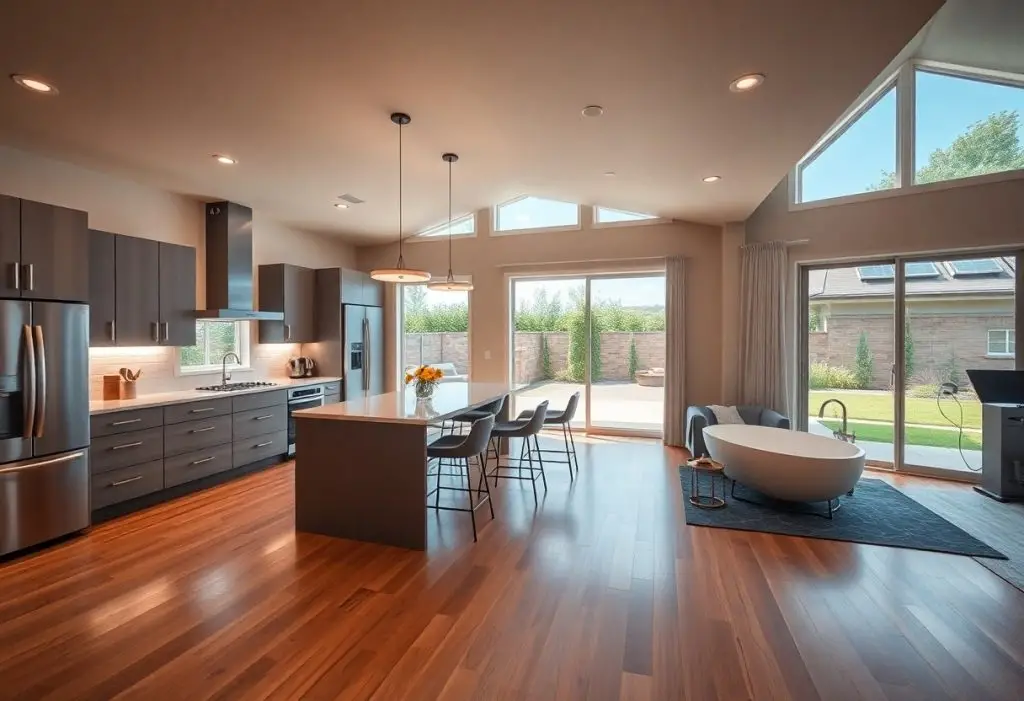
With energy-efficient appliances and smart home technology now standard, you expect updated homes to offer both comfort and long-term savings. Open floor plans, modern kitchens, and sustainable materials matter more than ever. You also prioritize natural light, low-maintenance exteriors, and functional outdoor spaces that support your lifestyle.
The Social Architecture of Open Spaces
You experience connection through design when walls dissolve into open layouts that invite interaction. Modern living thrives on spaces that support both gathering and retreat, shaping how you engage with family and guests. Flow matters as much as function, guiding movement and conversation with intuitive ease.
Visual Connectivity Patterns
Your eye follows pathways between rooms, drawn by aligned doorways, consistent flooring, and strategic sightlines. This alignment creates a sense of continuity, allowing you to stay aware of different activities without physical barriers. Spatial awareness enhances both intimacy and independence within shared areas.
Natural Light Distribution
Light transforms your perception of space, flooding rooms from multiple angles through larger windows and glass doors. You feel more alert and at ease when sunlight reaches deep into living areas, reducing reliance on artificial lighting during the day.
Sunlight travels farther when window placement considers the sun’s path and room orientation. You benefit from warmer tones in winter mornings and shaded comfort in summer afternoons when overhangs and glazing are thoughtfully applied. Clever design ensures even illumination, minimizing dark corners and enhancing your daily rhythm without glare or overheating.
The Digital Infrastructure Mandate
Smart technology is no longer a luxury-it’s a baseline expectation. You demand homes that support your connected lifestyle, from security to entertainment, with systems that work together effortlessly and adapt to your routines.
Integrated Smart Hubs
Your daily routines rely on centralized control. A unified smart hub lets you manage lighting, climate, and security from one app, reducing clutter and confusion while increasing convenience and responsiveness across all connected devices.
High-Performance Connectivity
Your household runs on constant, reliable internet. Multiple devices stream, work, and communicate simultaneously, requiring strong Wi-Fi coverage in every room and future-ready cabling to support rising bandwidth demands.
Hardwired Ethernet ports, mesh network compatibility, and structured wiring panels are now standard in updated homes. You expect full-home coverage without dead zones, especially with remote work and smart home devices multiplying. Fiber-ready infrastructure is a growing priority, ensuring your property can handle next-generation speeds without costly retrofits.
The Evolution of the Professional Niche
Remote work has redefined what homebuyers expect from residential spaces. You now seek dedicated areas that support productivity without disrupting household life. This shift has turned spare rooms into professional environments, blending functionality with comfort in ways that reflect your evolving work habits and lifestyle demands.
Acoustic Isolation Zones
You value quiet as much as space. Rooms designed with sound-dampening materials and strategic placement help separate work from home life. These zones ensure conference calls stay private and family noise doesn’t interrupt focus, giving you control over your environment without sacrificing openness.
Ergonomic Layout Priorities
Flow matters in how you use your home each day. You prefer layouts that reduce unnecessary movement and support natural transitions between tasks. Kitchens open to work nooks, bedrooms with intuitive storage, and bathrooms positioned for convenience all contribute to a home that works with your routine.
Efficiency shapes your daily experience more than you might realize. When cabinetry aligns with countertop workflow, or when a home office places your desk near natural light and power sources, small design choices add up. You don’t just move through your home-you live in it, and every corner should support how you actually use space, not how it’s supposed to be used.
The Environmental Footprint Shift
Today’s homebuyers assess a property’s long-term environmental impact as seriously as its layout or location. You’re not just investing in walls and windows-you’re choosing a lifestyle that reflects growing ecological awareness. Sustainable upgrades are no longer optional extras; they’re central to your decision-making process.
Ethical Material Sourcing
You expect transparency in where building materials originate. Reclaimed wood, recycled metal, and low-VOC finishes signal a home built with responsibility. Knowing that your floors weren’t sourced at the cost of endangered forests matters-your purchase supports values, not just aesthetics.
Operational Energy Savings
You feel the difference the first time you receive a low utility bill. Energy-efficient windows, smart thermostats, and LED lighting reduce consumption without sacrificing comfort. These features work quietly every day to lower your costs and environmental impact.
Smart insulation and high-efficiency HVAC systems play a major role in cutting energy use year-round. You benefit from consistent indoor temperatures, fewer repairs, and reduced reliance on fossil fuels. Homes with ENERGY STAR-rated appliances and solar-ready electrical panels offer immediate savings and long-term resilience, making them highly desirable in today’s market.
The Extension of the Interior
You expect your home to flow naturally from inside to out, blurring the lines between rooms and open-air spaces. Modern updates now prioritize large glass sliding or folding walls that open directly onto patios, creating a seamless transition. This expansion makes interiors feel larger and more connected to nature, enhancing both comfort and entertaining potential.
Culinary Outdoor Stations
You’ll find that outdoor kitchens are no longer just a luxury but a functional extension of daily life. Complete with grills, sinks, and refrigeration, these stations let you cook and host under the sky. They’re designed for real use, not just show, blending durability with style to match your indoor culinary space.
Low-Maintenance Xeriscaping
You appreciate landscapes that thrive with minimal effort, and xeriscaping delivers just that. Native plants, drought-tolerant greenery, and efficient irrigation reduce water use while keeping yards lush. This approach saves time and resources, offering beauty without constant upkeep.
Xeriscaping goes beyond cacti and gravel-it’s a thoughtful design strategy that uses layered plantings and natural materials to create depth and year-round interest. You benefit from reduced watering, fewer chemicals, and less mowing, all while supporting local ecosystems. Well-placed stones, mulch, and hardy perennials give your yard character without demanding constant attention.
The Aesthetics of Hidden Utility
Modern living demands clean spaces that feel open and uncluttered. You value design that integrates function without sacrificing form, where practicality disappears into the background. Hidden utility isn’t about concealment for its own sake-it’s about creating environments that support your lifestyle without visual noise.
Unobtrusive Storage Modules
Storage built into stair risers, under seating, or behind mirrored walls keeps imperatives within reach but out of sight. You gain space without compromise, maintaining clean sightlines while housing daily necessities. These modules adapt to your routines, making organization effortless and invisible.
Streamlined Visual Profiles
Appliances flush with cabinetry, recessed lighting, and wall-mounted fixtures eliminate visual clutter. You experience rooms as cohesive, calm environments where every element serves a purpose without drawing attention. Clean lines define the space, supporting a sense of order and simplicity.
Minimal protrusions mean fewer surfaces to clean and more wall space for expression. You notice the absence of bulk-ovens that align with countertops, faucets with hidden hoses, doors without handles. This precision isn’t just cosmetic; it reflects a deeper alignment between how a home looks and how it supports your daily rhythm, making efficiency feel intuitive.
Conclusion
Taking this into account, you prioritize energy efficiency, smart technology, open floor plans, and low-maintenance materials when choosing updated homes. Natural light, modern kitchens, and sustainable features also shape your decisions. Location remains central, but functionality and long-term value guide your investment more than aesthetics alone.