
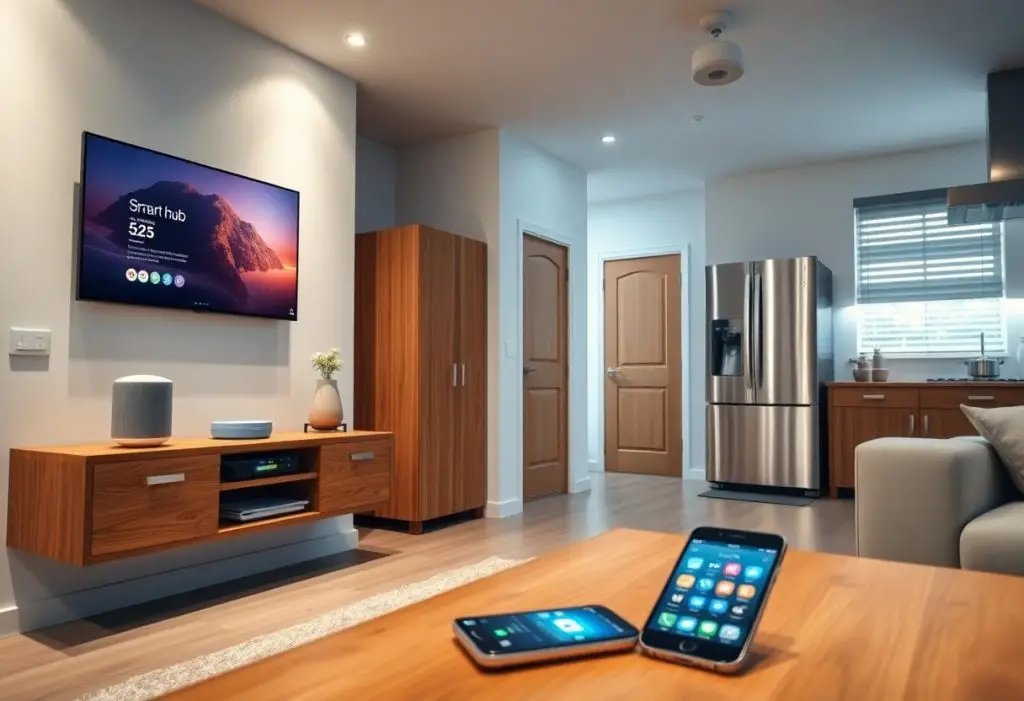
Smart home technology transforms how you interact with your living space, offering convenience, security, and efficiency. You can control lighting, climate, and appliances with voice commands or a tap on your phone. Upgrading your home with intelligent systems adapts to your routine, saves energy, and enhances daily comfort-all through intuitive, connected devices.
The Central Brain
Your smart home relies on a central hub to unify devices and streamline automation. This core system acts as the decision-maker, connecting lights, locks, thermostats, and sensors into one responsive network. With the right hub, commands flow smoothly and routines run without delays.
Picking the Hub
You need a hub that supports the protocols your devices use, like Zigbee, Z-Wave, or Matter. Compatibility ensures stable communication across brands and functions. Choose one with strong app support and regular firmware updates to keep your system running efficiently over time.
Building the Mesh
A mesh network strengthens your smart home’s responsiveness by linking devices so they relay signals to one another. This setup eliminates dead zones and improves reliability, especially in larger homes. Each connected device helps extend coverage naturally.
Mesh networks rely on multiple nodes communicating directly, rather than funneling everything through a single router. When you install smart bulbs, plugs, or sensors that support mesh protocols, they actively boost signal strength across the system. This means faster responses, fewer dropouts, and consistent performance even in multi-story or densely walled homes. Your network becomes self-reinforcing-more devices improve stability instead of straining it.
The Light in the House
Light shapes how you experience your home, influencing mood, focus, and comfort. With smart lighting, you gain control over brightness, color, and timing, tailoring illumination to match your daily rhythm. These systems adapt effortlessly, making your space more functional and inviting.
Smart Bulbs
You can adjust color and brightness from your phone or with voice commands. These bulbs let you set scenes for relaxation, work, or entertainment with a tap. Scheduling ensures your home is lit when you need it, saving energy and enhancing convenience.
Motion Sensors
They turn lights on when you enter a room and off when you leave. This hands-free operation adds safety and efficiency, especially in hallways or closets. You no longer fumble for switches in the dark or waste energy on empty rooms.
Motion sensors detect infrared signals from body heat, triggering lights only when movement occurs. You can customize sensitivity and delay settings to avoid false triggers or premature shutoffs. Installed in basements, garages, or stairwells, they provide reliable, automatic lighting that supports both security and comfort in your everyday routine.
The Heat and the Cold
Comfort in your home starts with precise climate control. Modern systems adapt to your routine, adjusting temperatures before you wake or return. You no longer need to tolerate uneven rooms or outdated settings. Smart heating and cooling respond in real time, keeping your environment just right while reducing strain on equipment.
Digital Thermostats
You set the temperature with a tap or voice command. Digital thermostats learn your schedule and adjust automatically, ensuring comfort without waste. They connect to your phone, giving you control whether you’re in the next room or across the country. No more forgetting to turn down the heat before leaving.
Saving Power
Energy use drops when your system runs only when needed. Smart sensors detect occupancy and adjust output, avoiding unnecessary heating or cooling. You see immediate reductions on your utility bills while maintaining comfort. Efficiency becomes automatic, not a daily chore.
Real savings come from consistent optimization. Your system analyzes weather forecasts, indoor conditions, and usage history to make micro-adjustments. During mild days, it minimizes HVAC cycles. At night, it pre-cools or pre-heats just enough. Over time, these small changes add up to major reductions in consumption-without sacrificing comfort.
The Locked Door
Security begins at your front door, and today’s smart home upgrades transform it into a responsive, intelligent barrier. You no longer need to worry about lost keys or unauthorized access-modern systems adapt to your routines while keeping intruders out. With real-time monitoring and remote control, your door becomes more than an entry point-it becomes part of your home’s awareness.
Keyless Entry
You unlock your door with a tap, a code, or even just your presence. Smart locks recognize your phone or fingerprint, granting access without fumbling for keys. This convenience also strengthens security-temporary codes let guests in without risk, and you can revoke access instantly from anywhere.
Video Feeds
Your door’s camera streams live footage straight to your phone, day or night. You see who’s there in real time, whether you’re across town or across the world. Motion alerts and two-way audio let you respond instantly, turning your entryway into a monitored checkpoint.
High-resolution video feeds offer more than just images-they provide intelligent detection that distinguishes between a passing stranger, a delivery person, or your child coming home from school. Night vision, wide-angle lenses, and cloud storage ensure you never miss a moment, while end-to-end encryption keeps your footage private and secure. You review clips with ease, knowing your home watches over itself when you can’t.
The True Sound
Immersive audio transforms how you experience media in your home. With the right setup, every movie, song, or podcast feels alive, filling the room with rich, balanced sound that matches your lifestyle and space.
Wireless Speakers
You place speakers where they fit best, not where wires allow. These compact systems deliver high-fidelity audio across rooms, syncing effortlessly with your network for uninterrupted playback.
Voice Control
You command your audio system without lifting a finger. Simply speak a request, and your speakers respond-playing tracks, adjusting volume, or switching rooms with natural, accurate recognition.
Voice control learns your preferences over time, adapting to your speech patterns and routines. It integrates with your existing smart home ecosystem, allowing you to manage music, calls, and announcements using only your voice, making daily interactions faster and more intuitive.
The Working Kitchen
Your kitchen evolves into a responsive hub where technology supports your daily rhythm. Smart devices anticipate needs, reduce effort, and streamline routines without demanding attention. Efficiency blends with comfort, turning meal prep and cleanup into quiet, effortless experiences.
Smart Appliances
You interact with appliances that adapt to your habits. Refrigerators track expiration dates, ovens sync with recipes, and dishwashers run during off-peak energy hours. These tools operate in the background, simplifying tasks while conserving resources.
Precision Heat
You gain exact control over cooking temperatures with induction cooktops and smart ovens. Sensors detect pan size and adjust heat distribution, preventing hot spots and undercooking. Meals turn out consistent, safe, and perfectly prepared every time.
Induction technology uses electromagnetic fields to heat cookware directly, not the surface. This means faster boiling, instant adjustments, and cooler surroundings. You benefit from responsive controls that match professional standards, all within a home kitchen setup designed for accuracy and safety.
Conclusion
Now you see how smart home technology upgrades simplify daily routines, improve energy efficiency, and enhance security. These systems adapt to your habits, offering convenience and control through intuitive interfaces. By integrating modern devices, you create a responsive living environment that supports comfort and peace of mind.